Shafaq News- Maysan
Heavy seasonal rains have refilled Iraq’s Hawizeh Marsh after five years of severe drought, partially restoring one of the country’s most important southern wetlands, Shafaq News lens captured on Wednesday.
The marsh, a UNESCO-listed heritage site, spans roughly 80
km (50 miles) in length and about 30 km (19 miles) in width. Located between
northeastern Maysan and southeastern Basra, Hawizeh Marsh had been reduced to a
shallow wetland. By 2025, its surface area had fallen to less than 600 square
km, while water depths in many areas dropped to around half a meter.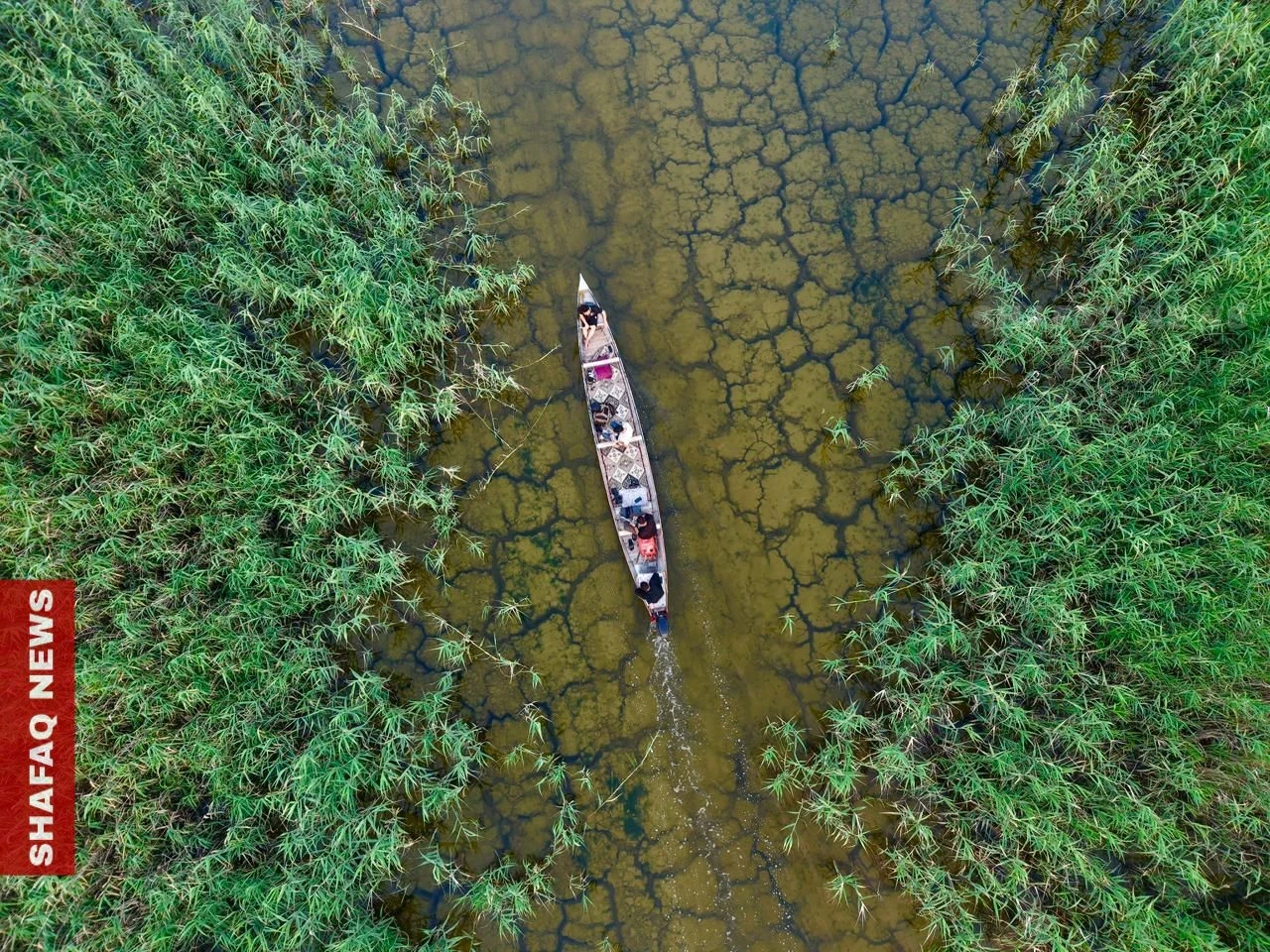
Rainfall that began in autumn 2025 and continued through April 2026 —the longest wet season in at least four decades— has restored large sections of the marsh, with reeds and papyrus re-emerging across newly flooded areas. Bird populations have returned to nesting sites, while fishing activity has resumed in some sections. Livestock herding has also restarted in areas where grazing has become available again. Despite these gains, the impact of the drought remains visible, with large cracks still marking the dried ground.
Read more: Iraq’s water crisis deepens: Reserves collapse, mismanagement continues