Shafaq News- Najaf
During the hot summer months, water shortages in the southern desert of Iraq’s Najaf province push nomadic Bedouin herders toward villages and farmland with their camels and sheep in search of water and pasture.
The seasonal journey highlights the growing pressures on herding in Iraq’s desert regions. Some herders are buying grazing rights to green fields and leftover crops to cut the cost of feed, while others are urging the government to build dams to capture seasonal floodwater.
The southern Najaf desert is vast, and its natural pasture and water sources rise and fall with the seasons and the weather. Bedouin families traditionally move between grazing grounds and water points, but as those sources dry up in summer, some are drawn closer to farming areas.
“Camels and livestock need water and fodder, so we choose farmland near villages and rural areas, where it’s easier to feed the animals,” camel herder Mohammed Jasib told Shafaq News.
Herders buy access to fields with leftover wheat, corn and other crops to rely less on ready-made feed and keep costs down, he said. But the option has its drawbacks. “Camels sometimes refuse to eat the leftover crops on farmland near the cities because of the chemicals farmers use to boost their yields.”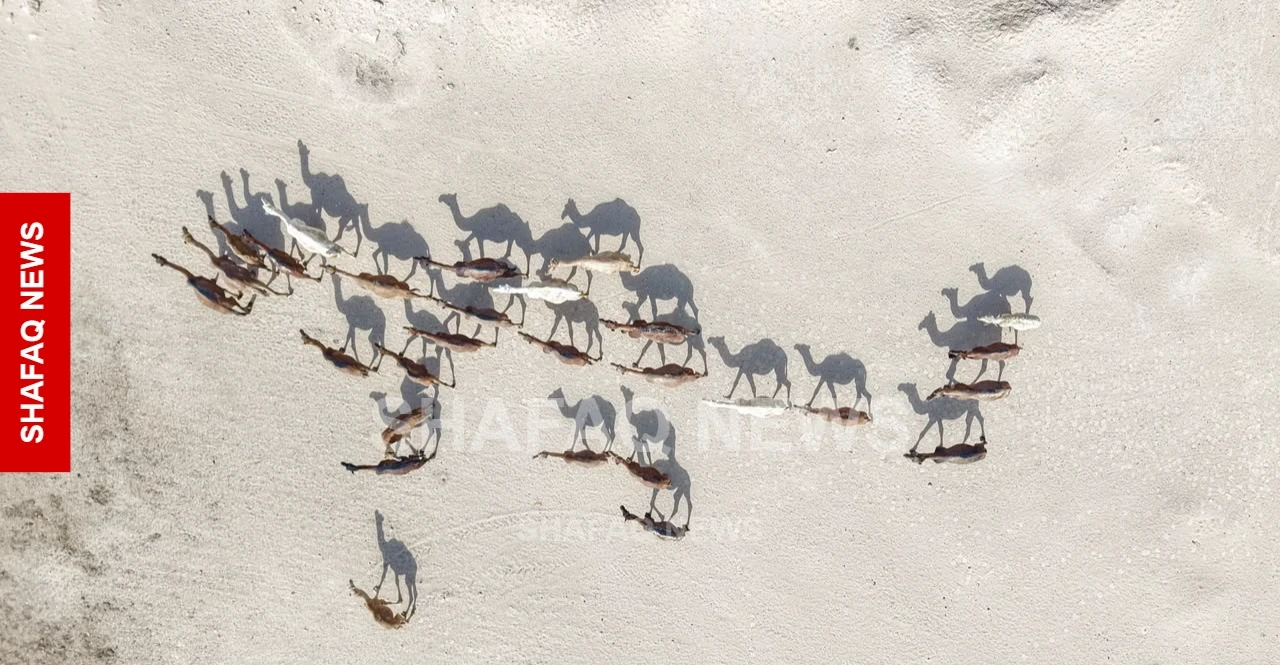
Another herder, Zamel al-Ali, urged the Iraqi government to build dams on the valleys that carry seasonal water down from the Saudi border, so it can be stored for the summer.
Capturing that water would give herders a reliable source for their camels and sheep, al-Ali said, as well as for some household needs of nomadic families, who struggle to find water during droughts and heat waves.
For families who depend on their herds for a living, water shortages, shrinking pasture and rising feed costs are making it ever harder to stay in the desert through the summer months.
Najaf province had 8,595 camels in the first half of 2026, according to deputy director of the provincial Agriculture Directorate, Hakim Taklif, who spoke to Shafaq News earlier this year. The province has also received hundreds of climate-displaced families in recent years, while some Bedouin families have left increasingly arid areas in search of better grazing and water conditions.
Read more: Discover Iraq: Najaf, a city of dust and divinity