Shafaq News- Gaza
The Dahman bakery in Beit Lahia once opened before sunrise, its ovens feeding a neighborhood that measured time by the smell of fresh bread. Today, the storefront is reduced to fractured concrete and ash. The family that ran it has lost limbs, children, and home, but not the oven.
In a single Israeli strike, Abu Alaa Dahman’s right hand was severed. His son Alaa lost his left leg. Another son, Khalil, lost a leg and suffered damage to one eye. Three grandchildren were killed. The survivors fled south, joining waves of displaced families sheltering in Khan Younis.
Months later, smoke rises again, this time from a clay oven the family shaped by hand beside their tent. For Abu Alaa, 60, baking is no longer commerce; it is continuity.
“The work isn’t easy, the dough, the firewood, the flames,” he said. “What one healthy man once did alone, Alaa and I now do together. My amputated hand and his missing leg complete each other.”
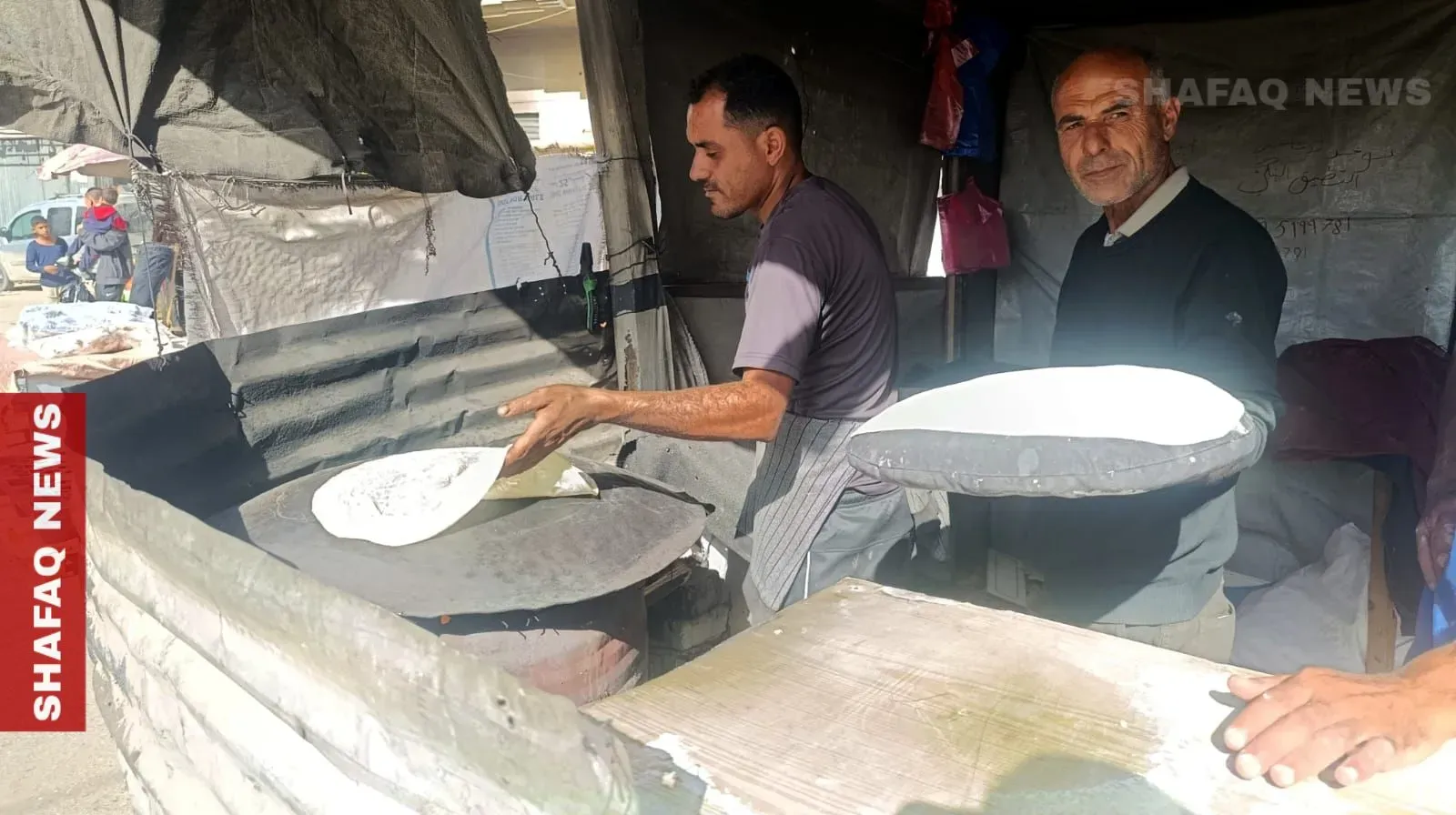
Without electricity or machinery, every batch demands coordination and endurance. Wood is rationed. Dough is kneaded slowly. Nearly 30 women and children depend on what that oven yields each day.
Khalil, 30, returned to work against medical advice. He has seven children. The displacement camp offers little protection from heat or cold, and less certainty about tomorrow. He stands on one leg beside the fire, measuring flour and tending embers.
Across Gaza, their story is replicated in fragments. Families have lost income, mobility, and shelter, yet continue to improvise ways to survive.
Data from Gaza’s Hamad Hospital for Rehabilitation and Prosthetics indicates that nearly 7,000 Palestinians have undergone limb amputations during the war, with children accounting for close to one-fifth of cases. Many face prolonged rehabilitation in a health system stretched beyond capacity. The World Health Organization has recorded more than 5,000 amputations since October 2023, alongside widespread spinal injuries, severe burns, and traumatic brain trauma, a scale of injury that will shape Gaza’s social and economic landscape for years.
Read more: Gaza’s forgotten wounded: A society rebuilt on crutches
The Dahmans’ original bakery may never reopen in Beit Lahia. Reconstruction is uncertain, aid fluctuates, and the war’s toll continues But each dawn in Khan Younis, fire meets flour again. In a territory defined by destruction, the Dahmans measure survival in loaves, thin, warm, and deliberate, proof that even under canvas and ash, life can be kneaded back into form.