Shafaq News- Al-Hasakah
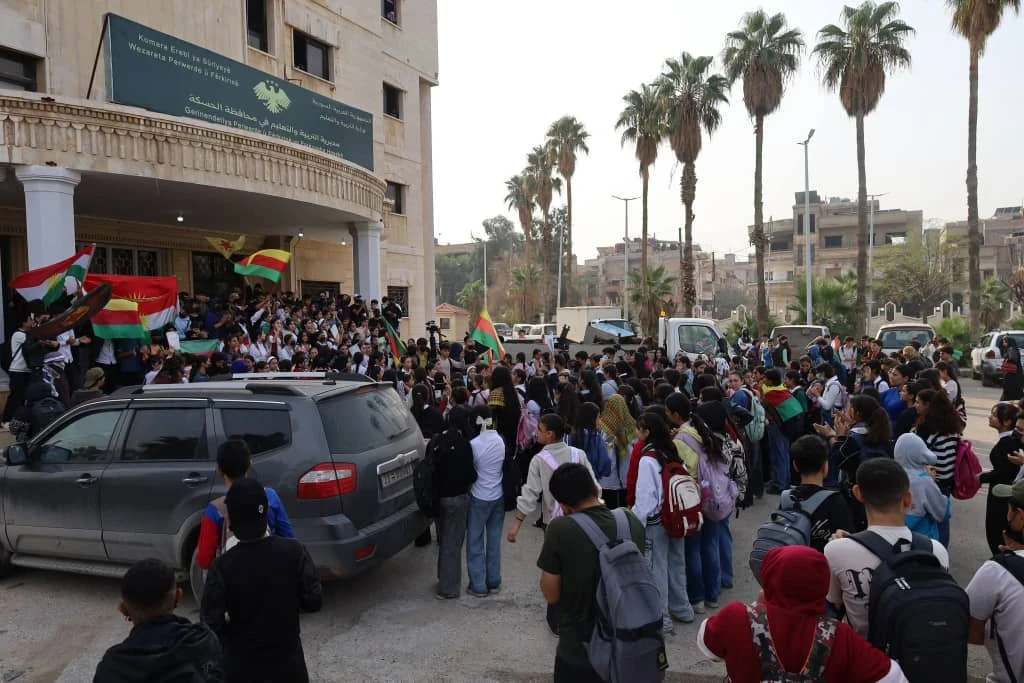
Several Kurdish students were injured on Wednesday when masked individuals attacked a demonstration outside the provincial government building in Syria’s Al-Hasakah, an eyewitness told Shafaq News.
Dozens of students had gathered to demand official-language status for Kurdish in Syria and the introduction of Kurdish-language school curricula, only to be attacked by a group of people, most wearing masks, who arrived on motorcycles from the city’s southern neighborhoods and pelted demonstrators with stones and physically assaulted them, university student Sherwan said. The injured students were taken to hospital.
The same group later attacked the provincial government building, heightening tensions in the city, according to a security source. Security forces closed the road linking the southern neighborhoods to the city center to prevent further violence, while Arab tribal elders intervened to help restore calm, a Shafaq News correspondent reported.
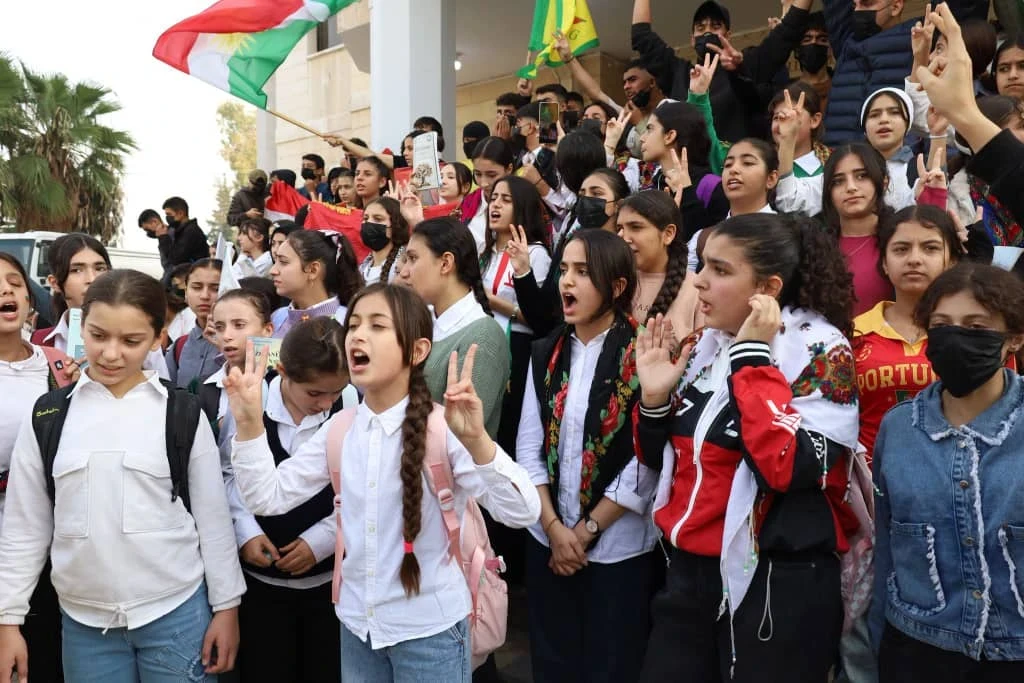
Similar demonstrations took place in Qamishli in September, when students and teachers demanded official status for Kurdish and more Kurdish-language instruction beyond the limited number of weekly classes.
Read more: Syria expands Kurdish education ahead of new school year
On August 27, Syria’s Education Ministry expanded Kurdish-language instruction in public and private schools in areas with significant Kurdish populations. Under the revised rules, schools must offer three Kurdish-language classes per week at all educational levels, with grades counting toward students’ final results, plus one weekly class for language activities. During the first academic year, students may study social studies, history, geography, and philosophy in either Arabic or Kurdish.
The changes implement Presidential Decree No. 13, issued by President Ahmad Al-Sharaa on January 16, which recognized Kurdish as a national language and permitted its teaching in schools in predominantly Kurdish areas without granting it official status alongside Arabic.
Read more: Kurds in Syria: From marginalization to a defining political force