Shafaq News- Karbala
Dozens of mass graves containing thousands of victims from central and southern Iraq and the Faili Kurdish community have been identified in the Tharthar and Akaz areas of al-Anbar province, the head of the Iraqi Center for Documenting Extremism Crimes said Saturday.
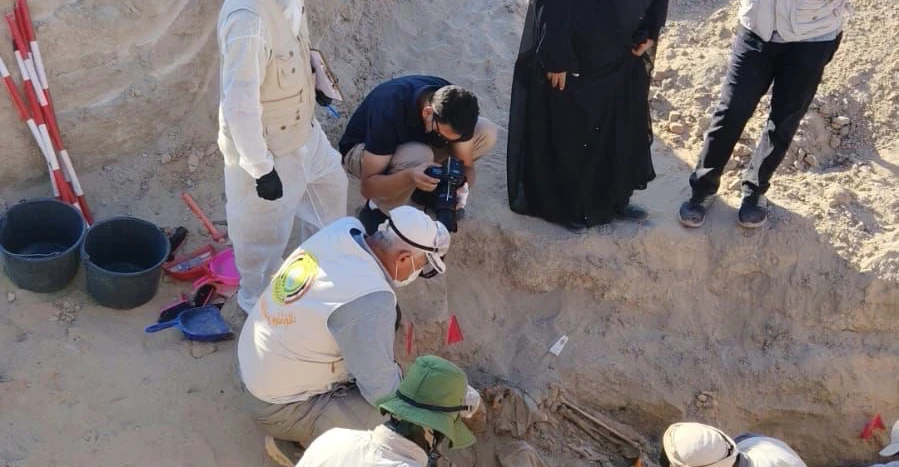
Abbas al-Quraishi, who heads the center under the al-Abbas Holy Shrine, told Shafaq News that the graves hold victims who were shot after being bound and blindfolded. "The mass graves are numerous, in each grave there are multiple burial sites, and in each site there are dozens of victims."
Read more: Faili Kurds: Decades of injustice VS. Iraq’s struggle to reconcile with its past
Al-Quraishi added that the sites were first identified in 2009 based on eyewitness testimony from the area, and that a number of them had been opened in prior years. Forensic teams recovered personal effects from inside the graves, including old coins in 50-fils and 100-fils denominations, toothbrushes, medicines, a copy of the Jawshan al-Kabir supplication, correspondence, and the identity card of an agricultural engineer.
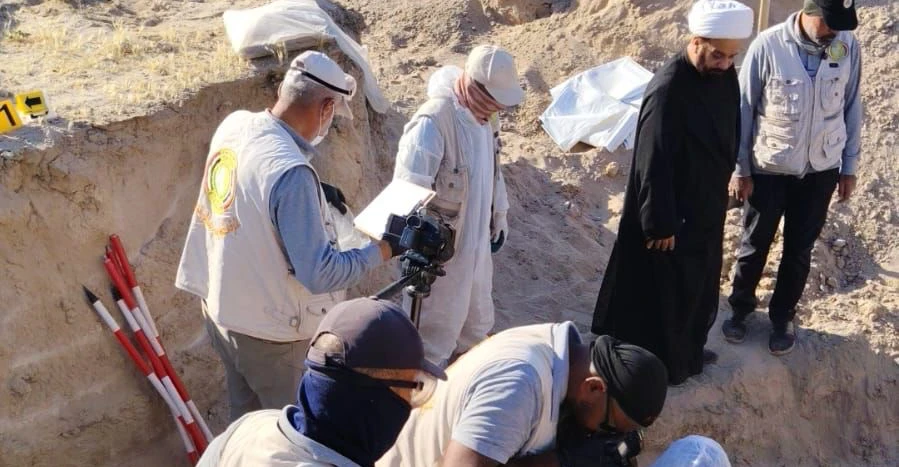
The center's director described the graves as direct evidence of the former Baathist regime's systematic practice of enforced disappearance and extrajudicial execution targeting citizens on religious, ethnic, political, and social grounds. Under international legal standards.
The Faili Kurds —a predominantly Shia Kurdish community historically concentrated in Baghdad and along the Iran-Iraq border— were subjected to systematic forced displacement under Baath Party rule beginning in 1980, when tens of thousands were stripped of their Iraqi citizenship on the pretext of alleged Iranian affiliation and expelled from the country. Their properties were confiscated, their civil rights revoked, and thousands of young men were detained, the fate of many of whom remains unknown to this day.
Read more: HRW urges Iraq to intensify mass grave exhumations