Shafaq News- Najaf
As winter rains approach, Adel Mohsen and his family are preparing to search the desert of Iraq's Najaf province for, a locally prized quartz stone that becomes easier to spot when rainfall washes away the surrounding sand and gravel.
Sunlight reflecting off the stones after the clouds clear reveals their distinctive sparkle, drawing families and collectors into the desert.
Beyond their appearance, the stones hold religious and cultural significance for many people. Visitors buy them for their perceived blessings or give them as gifts to relatives and friends, while some religious figures wear them in rings, reflecting a tradition closely associated with Najaf.
Searching After The Rain
Mohsen told Shafaq News that preparations begin before winter, with his family checking their vehicle, gathering equipment and identifying promising locations during exploratory trips into the desert.
His five-member family works as a team, dividing the tasks of searching, collecting and sorting stones. Other groups also operate across different parts of the desert.
After collection, the stones are washed, cleaned and sorted by color and clarity. According to Mohsen, the most transparent pieces generally command higher prices and sell more quickly.
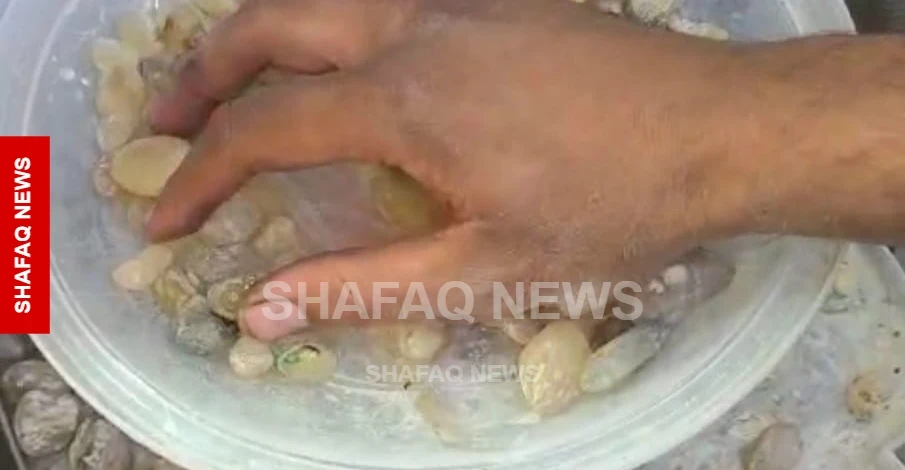
Abdullah Rahim said the search also attracts nomadic shepherds, who collect stones while moving through the desert and sell them to gemstone traders and collectors.
From Desert Stones To Jewelry
Collected stones eventually reach gemstone shops in Najaf's old city, where craftsmen cut, shape and polish them into rings and other items.
Haidar al-Khafaji, a gemstone shop owner, told Shafaq News that traders buy the stones in their raw form from collectors and nomadic shepherds.
He said each stone undergoes five stages of preparation before sale, including grinding and polishing. Some pieces are engraved with names or Quranic verses at customers' request.
For local traders, geographical origin is central to a stone's identity.
Al-Khafaji explained that dealers generally recognize a stone as genuine Durr al-Najaf only if it comes from within Najaf province, even though similar stones can be found in neighboring areas.
He identified several locally recognized varieties, including oily, Makhbout and clear Durr al-Najaf, whose characteristics and prices vary according to appearance and clarity.
The stones are a form of quartz, according to geological research, with natural impurities contributing to differences in color and appearance.
Online Buyers
The trade is no longer confined to Najaf's old city. Al-Khafaji said gemstone dealers increasingly use social media to display their collections, explain the differences between varieties and attract customers from outside the province.
Orders are now placed through online platforms, with specialized delivery companies transporting purchases to customers in other areas.
Read more: Discover Iraq: Najaf, a city of dust and divinity