Shafaq News– Diyala
As winter loosens its grip and the first signs of milder weather arrive, Iraq’s Diyala province’s orchards are stirring back to life. Across the province, farmers are launching the annual pruning and cleaning season-a quiet but decisive ritual that sets the tone for the entire agricultural year ahead.
From early morning, workers fan out among the date palms and fruit trees, stripping away hardened fronds, clearing trunks, trimming branches, and hauling away the debris of the past season. The work is slow, physical, and unglamorous. But for growers here, it is non-negotiable. Done right, it improves air circulation, limits pests, and determines how generously the trees will bear fruit in the months to come.
“This is where the season is decided,” said Mohammed Mutaib, a farmer from the Khales district. “Pruning is not just about palms. We clean irrigation channels, remove weeds, prepare the soil, and add fertilizers. Spring does not forgive neglect.”
For many families, the orchards become a second home during these weeks. From sunrise until dusk, relatives and neighbors work side by side, reviving an old tradition locally known as faz‘a —mutual aid organized in small teams, each assigned a task. One group handles palm pruning, another clears waterways, a third removes invasive growth choking young trees.
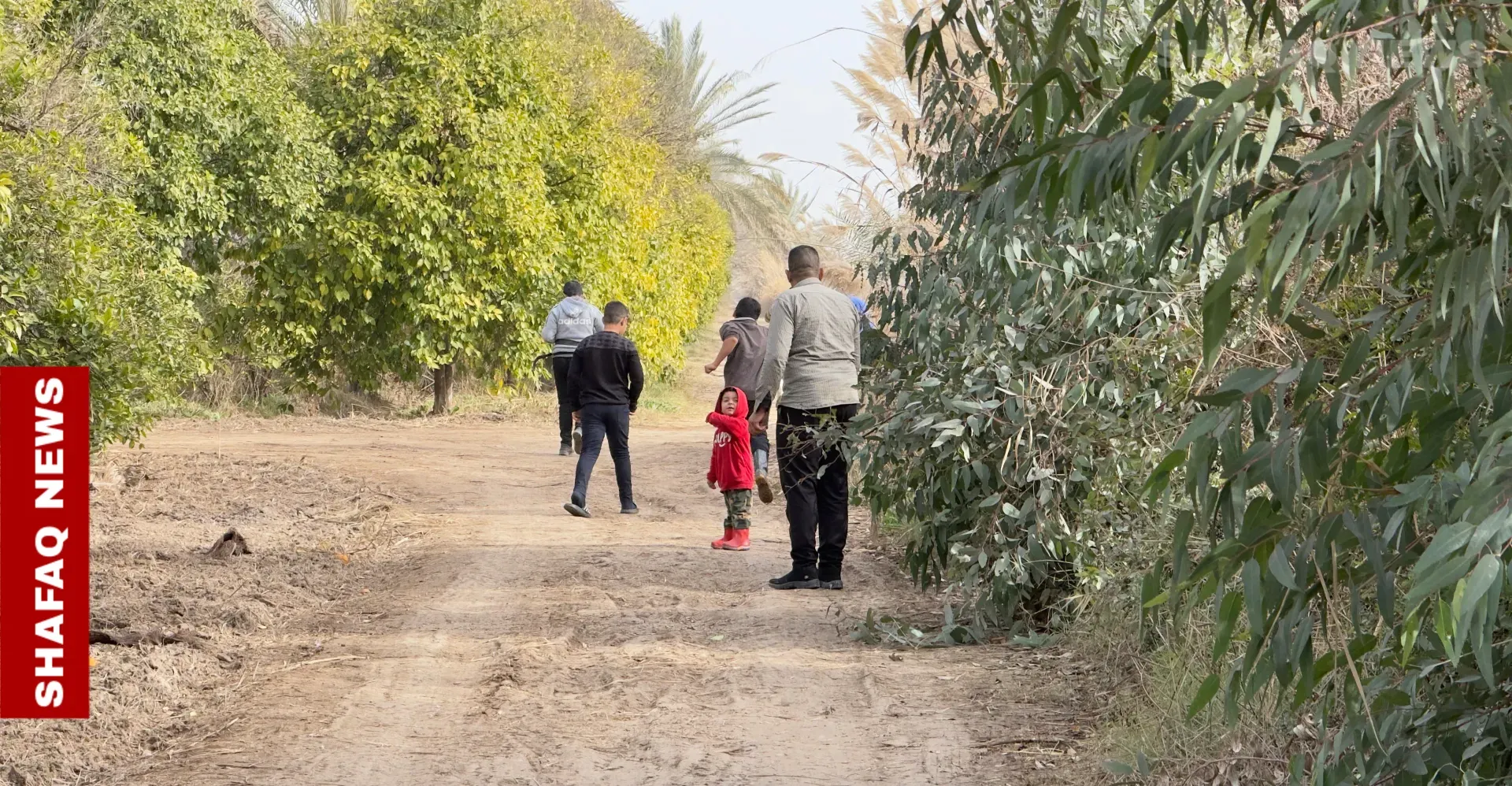
Despite years of drought, competition from cheap imports, and what farmers describe as limited government support, many in Diyala refuse to abandon their land. “These orchards are not just an income,” said farmer Adnan Al-Miyahi. “They are an inheritance. You do not walk away from your grandparents’ trees, even when it is hard.”
At the heart of the season is one of Iraq’s most specialized rural professions: the palm climber. Known locally as sa‘ood al-nakhl, these workers scale towering palms using rope, balance, and muscle memory learned over decades. Not every family has one. Those who do not must hire specialists, paying between 3,000 and 5,000 dinars per tree, money most farmers consider a necessary investment.
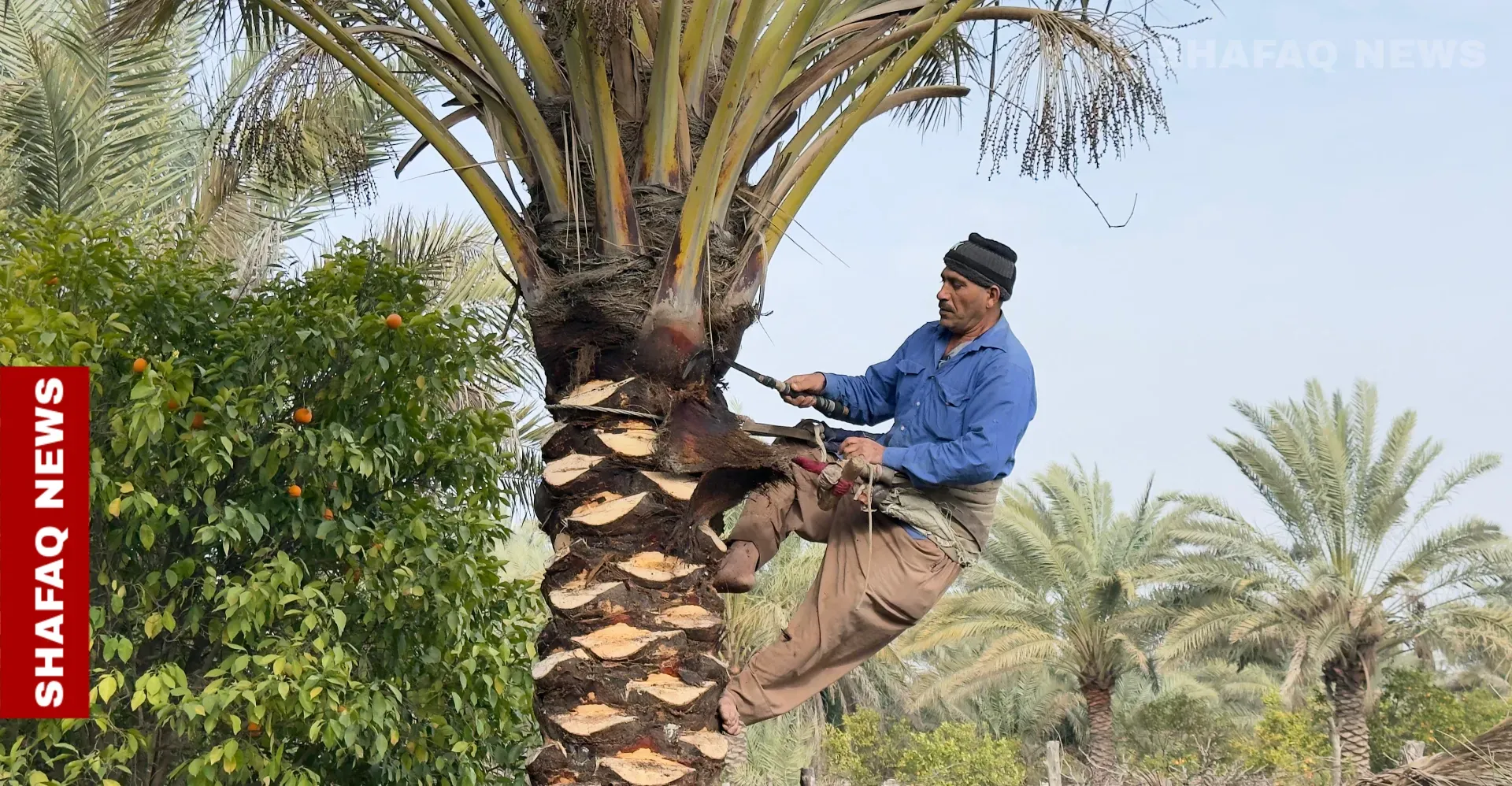
“This stage is the first line of defense for the palm,” said Abdulrahman Al-Ubaidi, a veteran climber. “Good pruning means fewer insects, fewer diseases, and better dates. Skip it, and you will pay the price later.”
For climbers like Al-Ubaidi, the pruning season is also their most important window of work. “We are busy now, then again in summer when we cut the date clusters and prepare for harvest,” he said. “For poorer families, we often lower our fees, or work for free. Everyone here depends on these trees.”
The results of the season’s labor are not immediate. There is no instant reward, no visible transformation overnight. But by the time summer arrives and the dates ripen, the difference is unmistakable.
In Diyala, pruning season is more than farm maintenance. It is a statement of persistence, a belief that care, patience, and inherited knowledge still matter in an economy that often works against small growers. The work may pass unnoticed beyond the orchards, but it is here, among the palms, that the coming harvest is quietly decided.