Shafaq News– Baghdad
In the narrow lanes of Shawakha, one of Baghdad’s oldest commercial quarters, Abu Mohammed keeps a trade alive that is steadily slipping out of the city’s daily life. Inside a modest workshop, he handcrafts the mukrafa—a simple scooping tool once essential to Iraqi homes and markets—at a time when imported alternatives dominate shelves and habits alike.
The mukrafa, a traditional shovel used to transfer staples
such as flour, sugar, and grains from sacks to scales or containers, was long a
fixture of neighborhood shops and household kitchens. Today, it has been pushed
to the margins, displaced by cheaper, mass-produced plastic and metal tools
that move faster through a market shaped by imports rather than heritage.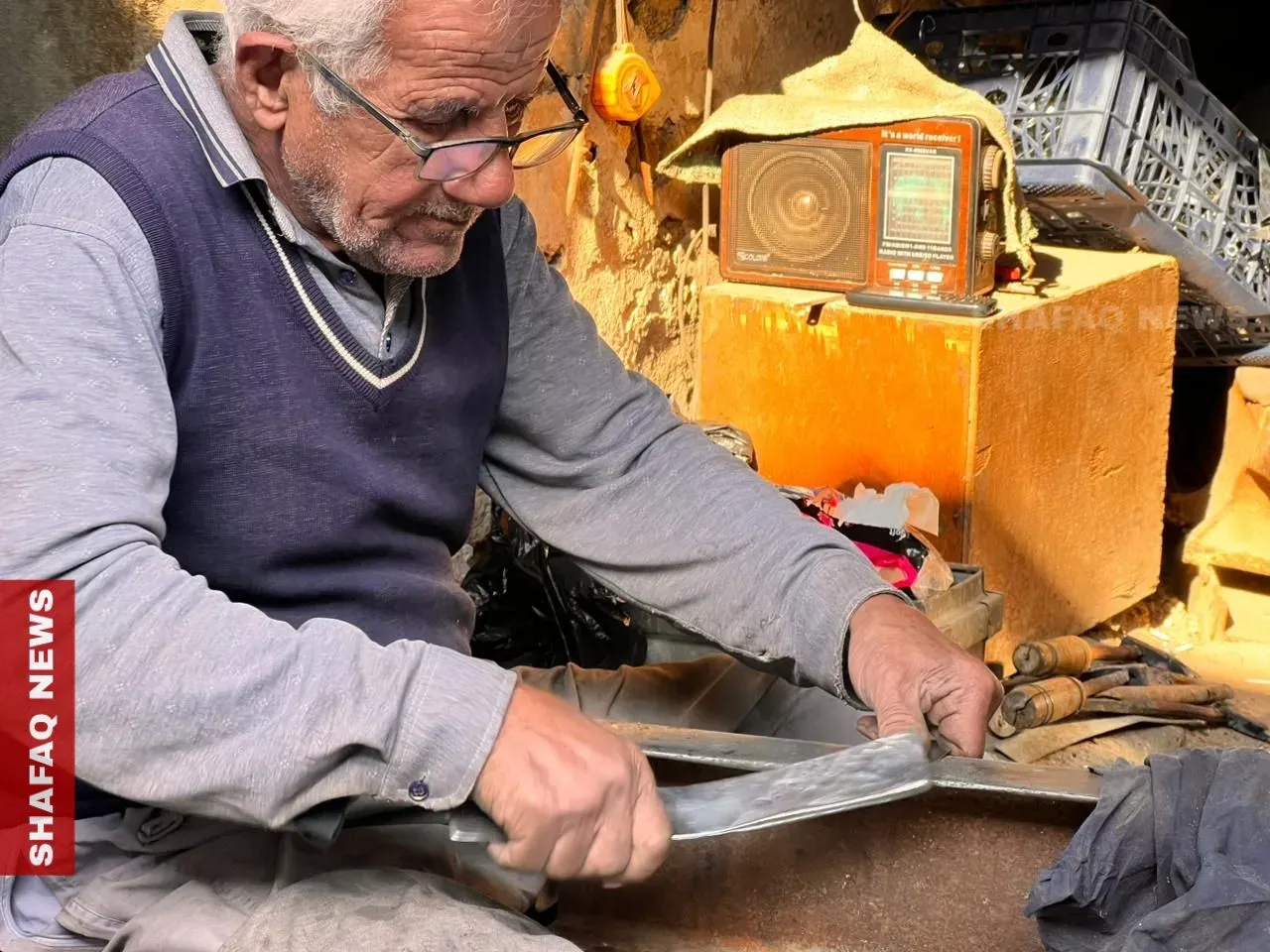
Speaking with Shafaq News, Abu Mohammed notes that the craft was passed down to him as a matter of inheritance, but without any of the protection that once allowed such skills to endure. Demand has fallen sharply in recent years, and with no government backing or preservation initiatives for traditional industries, sustaining the trade has become a daily struggle rather than a viable livelihood.
What is at risk, artisans warn, is more than income. The fading of hand-made tools like the mukrafa represents a broader erosion of Baghdad’s urban memory—skills and objects that quietly shaped everyday life for decades, now reduced to curiosities in a city flooded with foreign goods.