Shafaq News - Babil
In a narrow alleyway of old Hilla, central Iraq, artist Saad Mubarak has transformed a lifelong passion into a mission to preserve the city’s cultural heritage through handmade artworks and public installations.
Mubarak, born in 1971 and widely known as “Abu Fatima,” is a member of the Iraqi Artists Syndicate. Using wood, light fixtures, glass, and scale models, he produces pieces inspired by Hilla’s architectural traditions, particularly the distinctive shanasheel balconies that once adorned its historic homes.
“I had nothing but a love for art when I began,”
Mubarak explained in an interview with Shafaq News. “The passion for it was
stronger than anything else. I didn’t study it academically, but I lived with
it, I grew with it, until it became part of who I am.”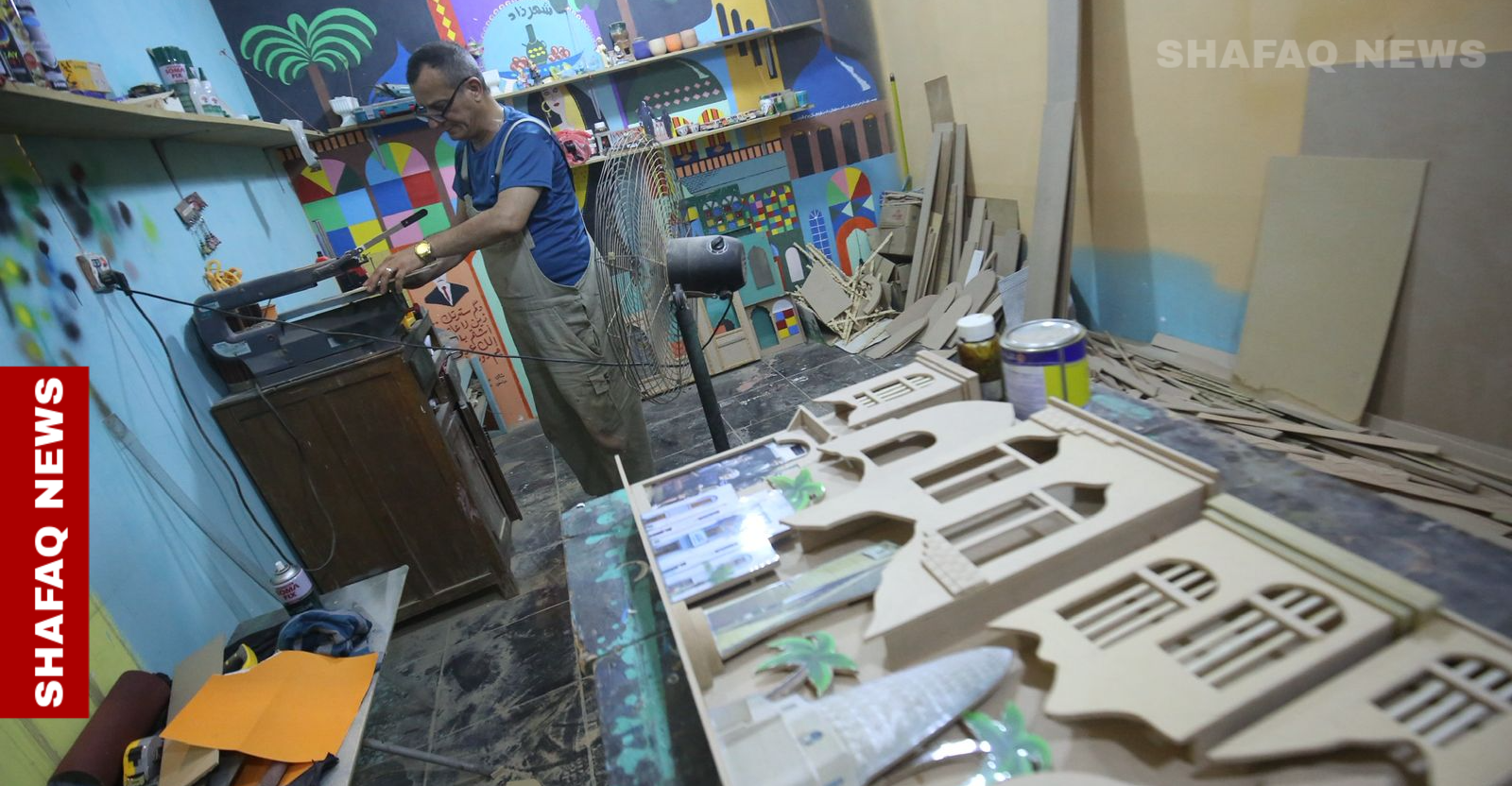
Operating independently and without institutional support, Mubarak has continued to produce distinctive work. Several of his pieces have been shown in exhibitions abroad, including six sent to Jordan and others displayed in France.
Among the projects he values most are the artworks installed free of charge in public spaces throughout Hilla — an effort he views as essential to preserving the city’s visual and cultural identity.
Each piece is crafted manually using
traditional methods. Mass production is avoided entirely, and Mubarak places
emphasis on the character and originality of his work over scale or commercial
gain. “Every item is made by hand. I don’t use factory tools and I don’t accept
cheap replicas.”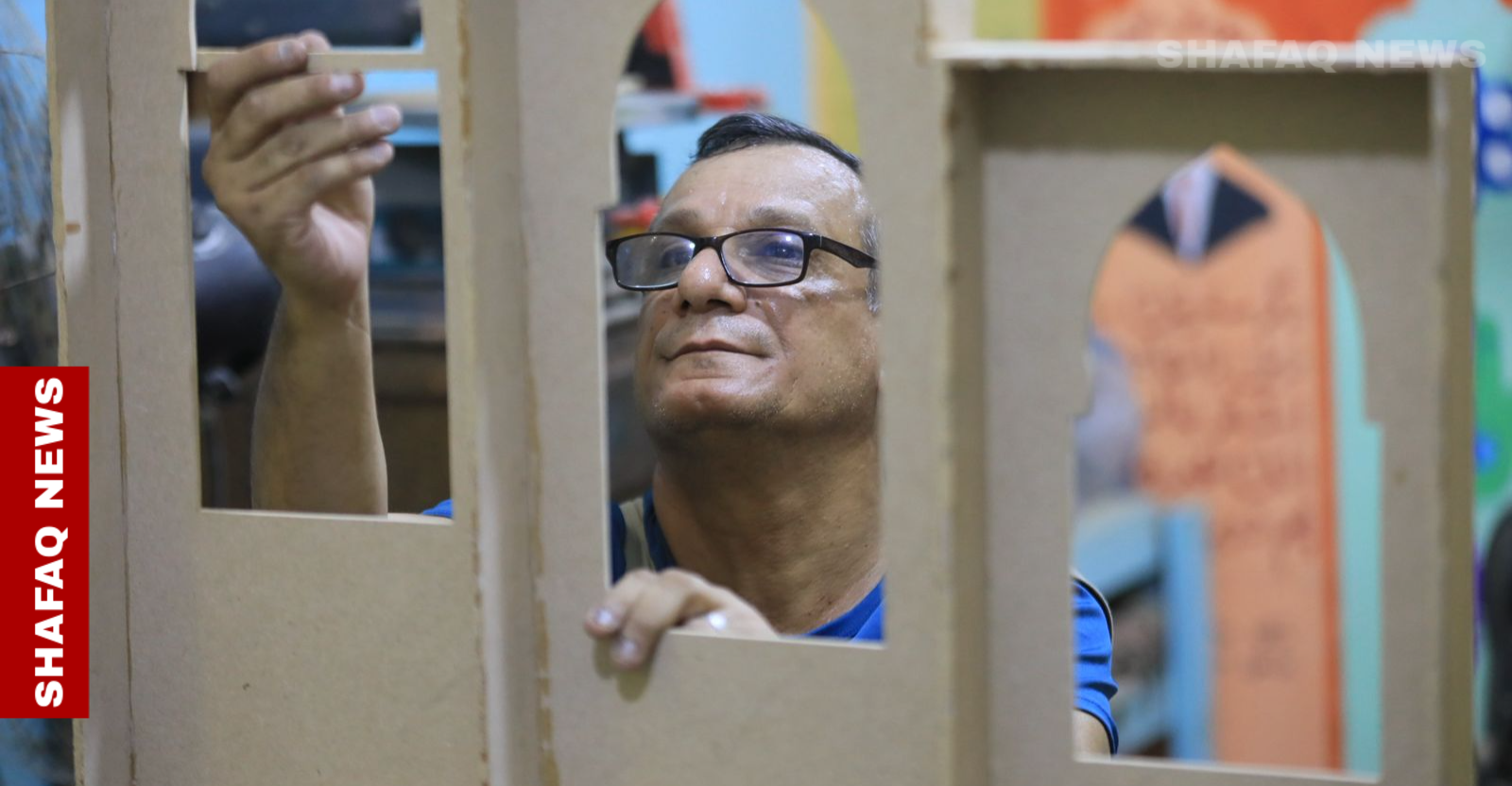
Now retired, Mubarak still relies on his art as his primary livelihood and as a source of enduring pride. His paintings, he believes, serve as a continuation of his personal journey and as a tribute to Hilla, the city where he was born and raised.
For Mubarak, art is not only a visual expression but a reflection of Hilla’s spirit, explaining that "through simple tools I try to show the kindness of this city and the generosity of its people, turning places into stories."