Shafaq News- Karbala
This year's Arbaeen pilgrimage in Iraq has been marked by the widespread display of Iranian flags along the routes to Karbala, with banners carried by many Iranian pilgrims, some Iraqi participants, and displayed at several mawakib (volunteer-run hospitality tents).
Although national flags from Arab, Islamic, and other countries have long been part of the annual pilgrimage, the Iranian flag has stood out this year because of its noticeably broader presence, while Iraqi flags and those of other participating nations have appeared less frequently.
The development comes despite previous guidance from Iraq's top Shiite religious authority in Najaf, which urged organizers and participants not to use religious pilgrimages for political or partisan promotion and to preserve the religious identity of the occasion. Those recommendations, however, were not observed by most of the participants.
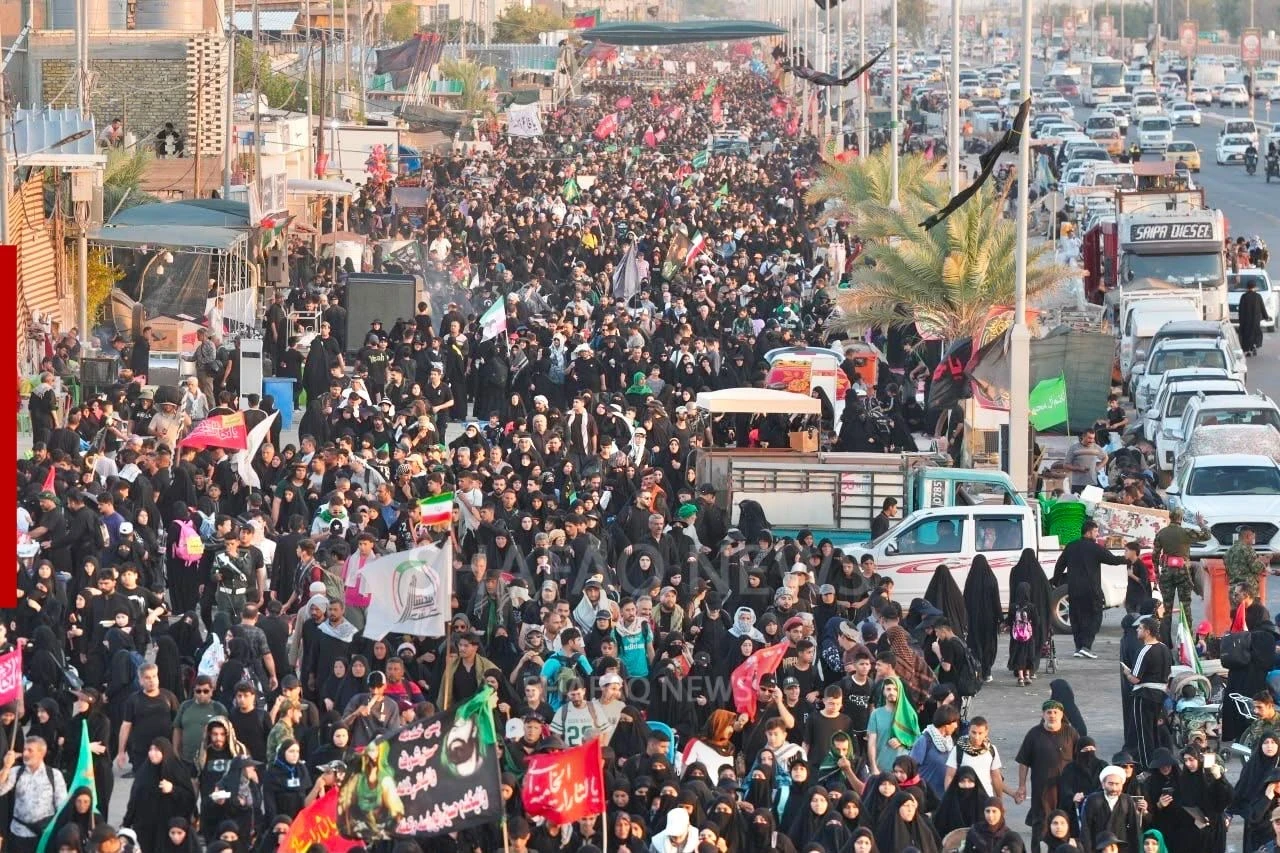
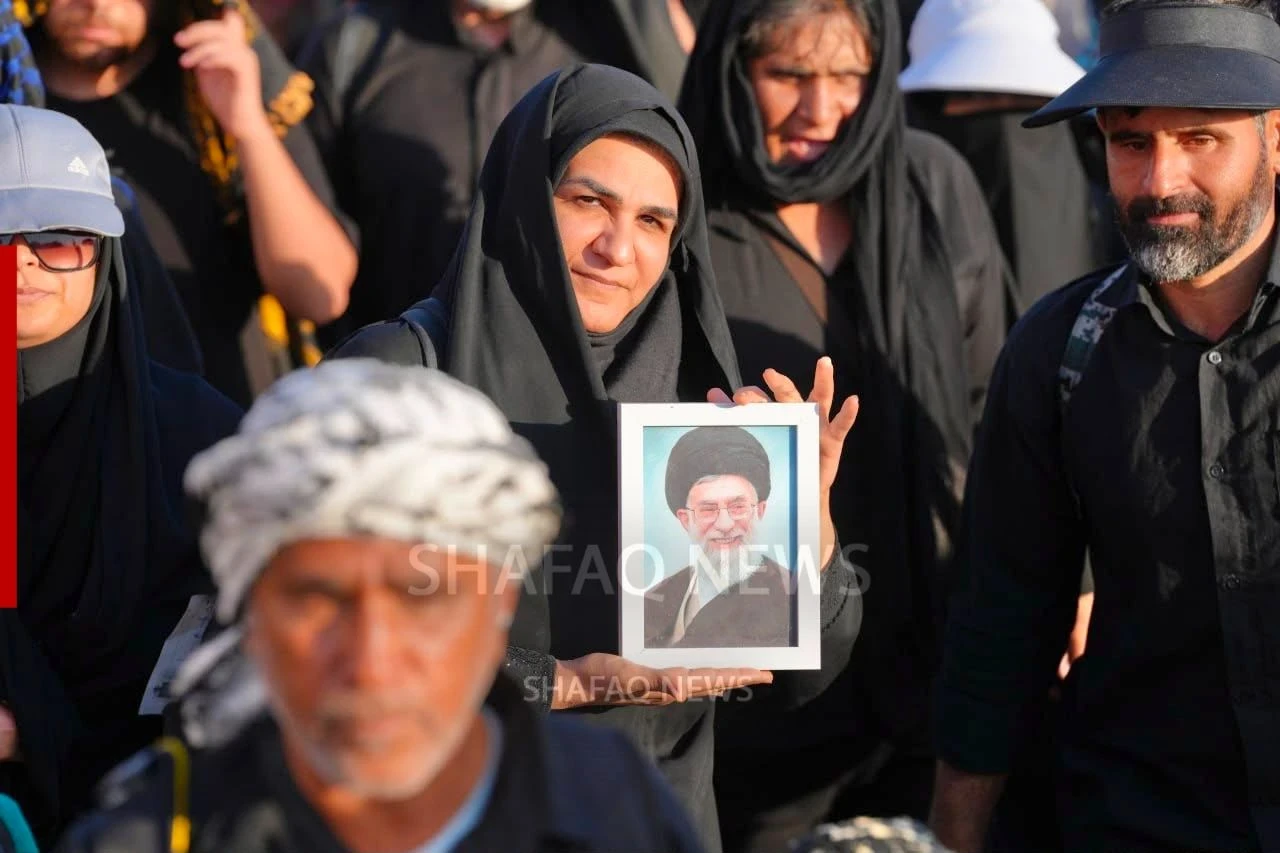
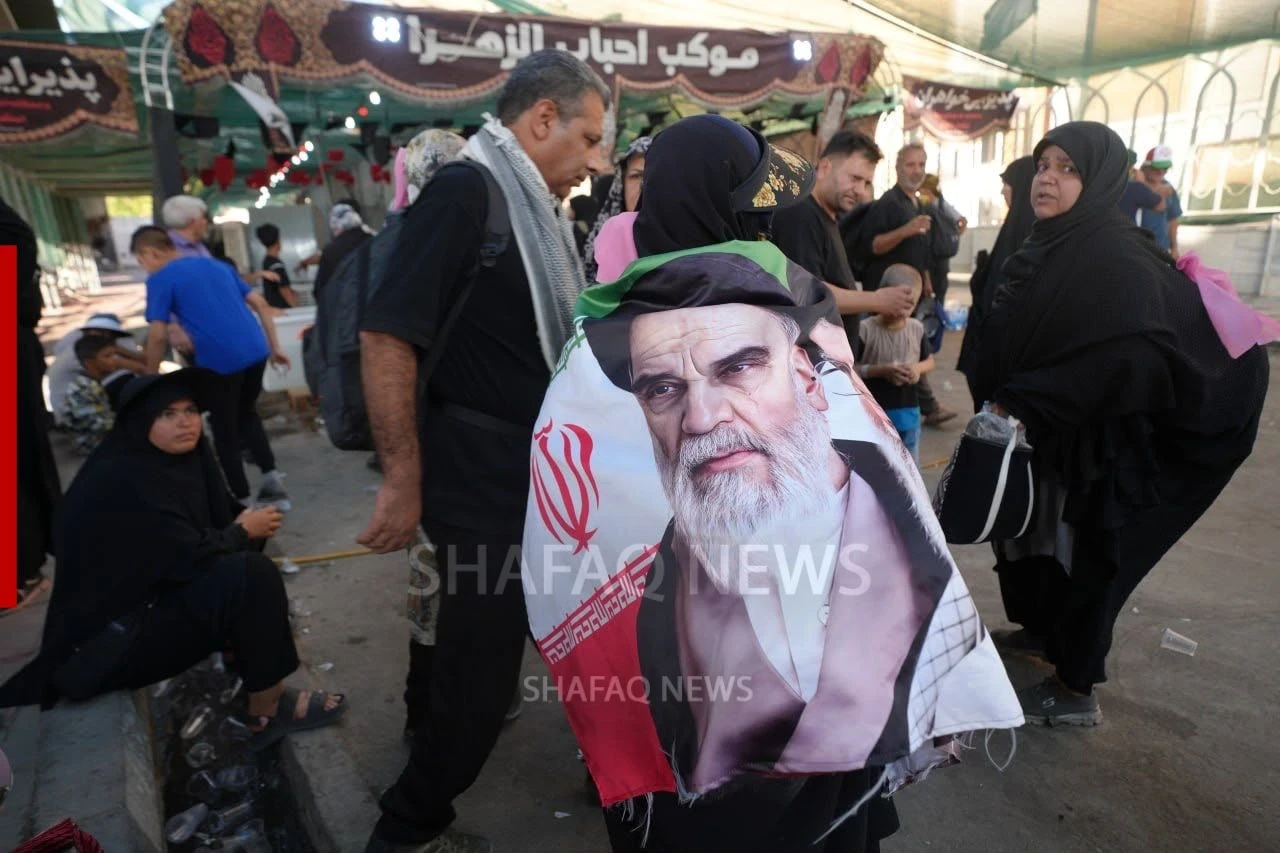
As in previous years, Shafaq News correspondents and photographers accompanied pilgrims walking toward Karbala, documenting the broadest display of Iranian flags in recent Arbaeen pilgrimages. They also recorded images of Iranian leaders, including the late Ali Khamenei and the current leader, Mojtaba Khamenei.
The increased visibility of national flags prompted mixed reactions among pilgrims. Some argued that the banners of Imam Hussein and symbols directly associated with Arbaeen should remain the dominant feature of the pilgrimage. Others called for greater prominence of the Iraqi flag, while another group considered it natural for foreign visitors to display the flags of their own countries as an expression of national identity.
Ali Saleh, a 31-year-old pilgrim, told Shafaq News that the banners of Imam Hussein alone are sufficient during the Arbaeen pilgrimage, calling for clear and binding regulations governing the display of Iraqi and foreign flags.
"All parties, political groups, and movements should be prevented from displaying their flags or symbols during this volunteer service event to preserve its humanitarian nature and keep it separate from political competition."
Jaafar Al-Mousawi, 49, said the large number of pilgrims, particularly along the Najaf-Karbala route, made the presence of Iranian flags especially noticeable. "It is natural for visitors to raise the flags of their countries, and that makes us happy," Al-Mousawi told Shafaq News, explaining that European, Arab, and other Islamic national flags appeared less frequently this year than during last year's pilgrimage.
He attributed that decline to ongoing conflicts and regional developments, saying they had affected the number of Arab and international pilgrims traveling to Iraq.
Another pilgrim, Salman Abbas, 29, urged the authorities overseeing the Arbaeen pilgrimage to require mawakib organizers to display the Iraqi flag and to install Iraqi flags along the poles marking the Najaf-Karbala route.
Abbas said the route contains more than 1,400 numbered marker poles used to guide pilgrims and called for volunteer campaigns to distribute Iraqi flags and encourage participants to carry them.
"It would be wonderful to see our country's flag stretching across the nearly 80-kilometer route," he said, noting that he had mainly seen Iranian flags along the road as well as inside and around the city of Karbala.
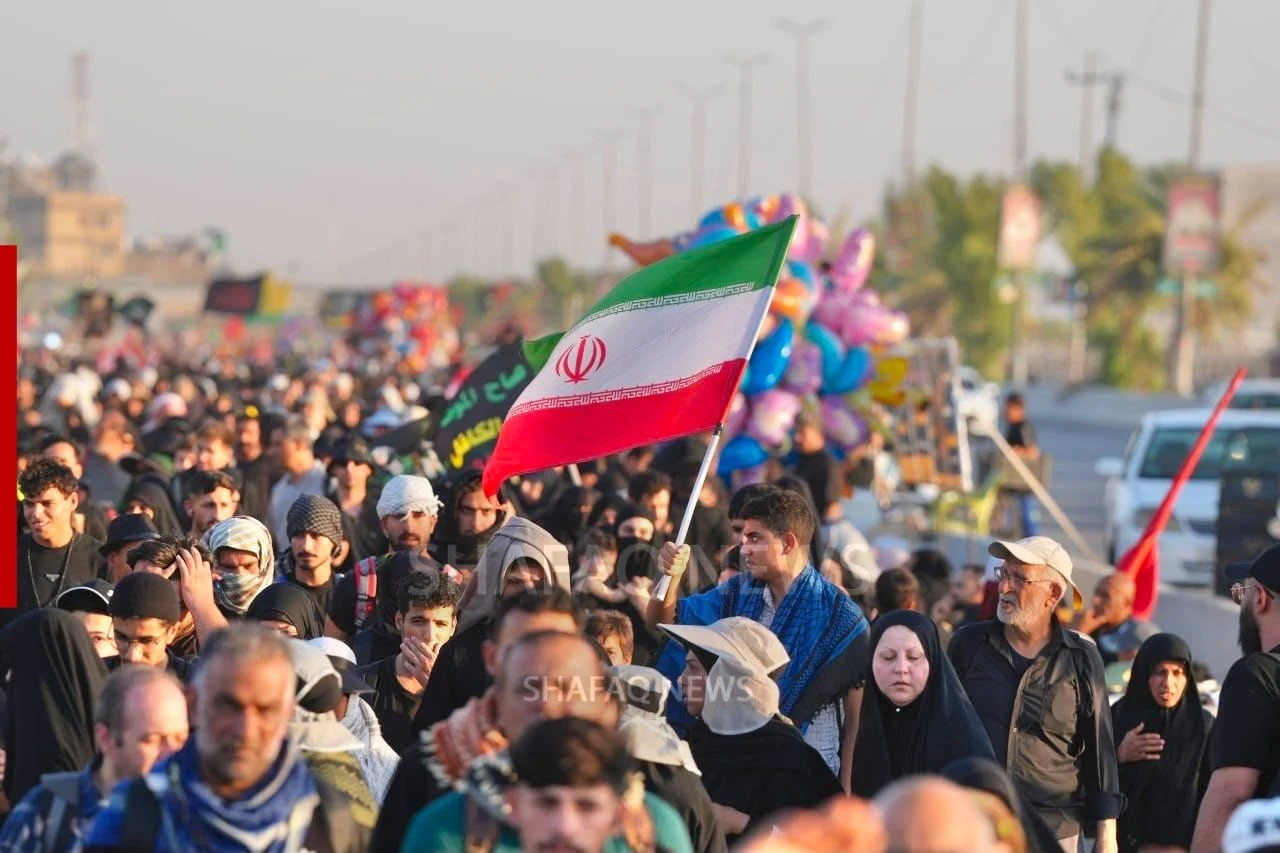
Iranian pilgrim Zainab Mohammadi, 25, said Iranians make a point of carrying their national flag wherever they travel because "the flag is part of who we are."
“Displaying the Iranian flag, along with photographs of people killed during the war involving the United States and Israel, represents love for the country and recognition of those sacrifices.”
According to Mohammadi, raising the Iranian flag sends "a message to the world that we love our country and will not allow any state to threaten its security or the safety of its people." She also clarified that the conflict with the United States and Israel had strengthened, in her view, feelings of resilience, patriotism, and respect for the country's leadership.
“I was pleased to see Iranian flags displayed at mawakib and along the pilgrimage routes,” she expressed, indicating that “I carried her country's flag from the moment she entered Iraq until reaching Karbala.”