Shafaq News- Baghdad/ Erbil
Heavy spring rains swept across Iraq in recent days, triggering floods, cutting key roads, isolating villages, and pushing water infrastructure to capacity in one of the season’s most disruptive weather waves.
In Erbil, the capital of the Kurdistan Region, the Kasnazan Dam reached full capacity after the latest rainfall, holding about one million cubic meters of water and forcing excess flows toward surrounding areas and the Erbil plain. The dam, completed in 2025, is part of a broader network aimed at flood control and groundwater recharge, but current inflows have tested its discharge limits.
In Mosul, torrential rain before dawn prompted emergency deployment of drainage crews, who worked to prevent water accumulation in streets. Officials said networks remained operational despite the intensity of rainfall.
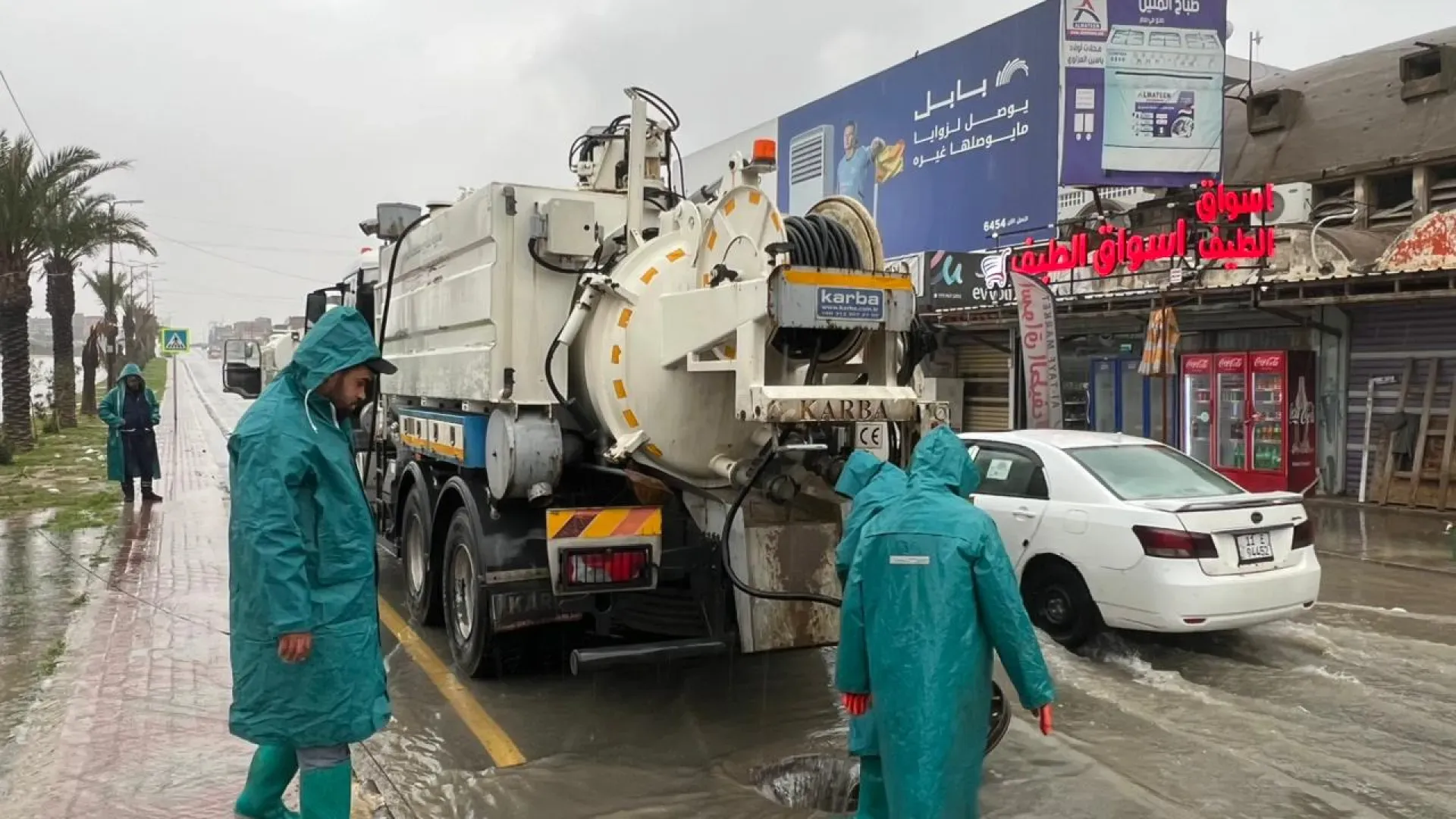
Flooding in western Al-Anbar blocked several major routes after runoff from Wadi Zghdan surged across low-lying roads, halting traffic and stranding vehicles. More than eight million cubic meters of rainwater flowed into the Euphrates River within two days, sharply raising river levels.
In eastern Saladin province, flash floods submerged sections of the Tuz Khurmatu–Baghdad highway, stopping freight movement and leaving dozens of trucks idle. Drivers diverted to alternative routes as water and mud made passage impossible. Further north in Al-Alam District, rising waters from the Tigris River flooded villages and trapped families inside their homes. Rescue teams deployed to evacuate residents and deliver aid as authorities formed a crisis cell to coordinate the response.
In Kirkuk, officials warned of rising levels in the Lower Zab River following increased releases from Dibis Dam. Authorities closed a tourist resort in Altun Kupri and urged residents to stay away from riverbanks due to strong currents. Floodwaters also isolated villages in Laylan, cutting access roads and leaving residents without immediate assistance as water levels continued to rise.
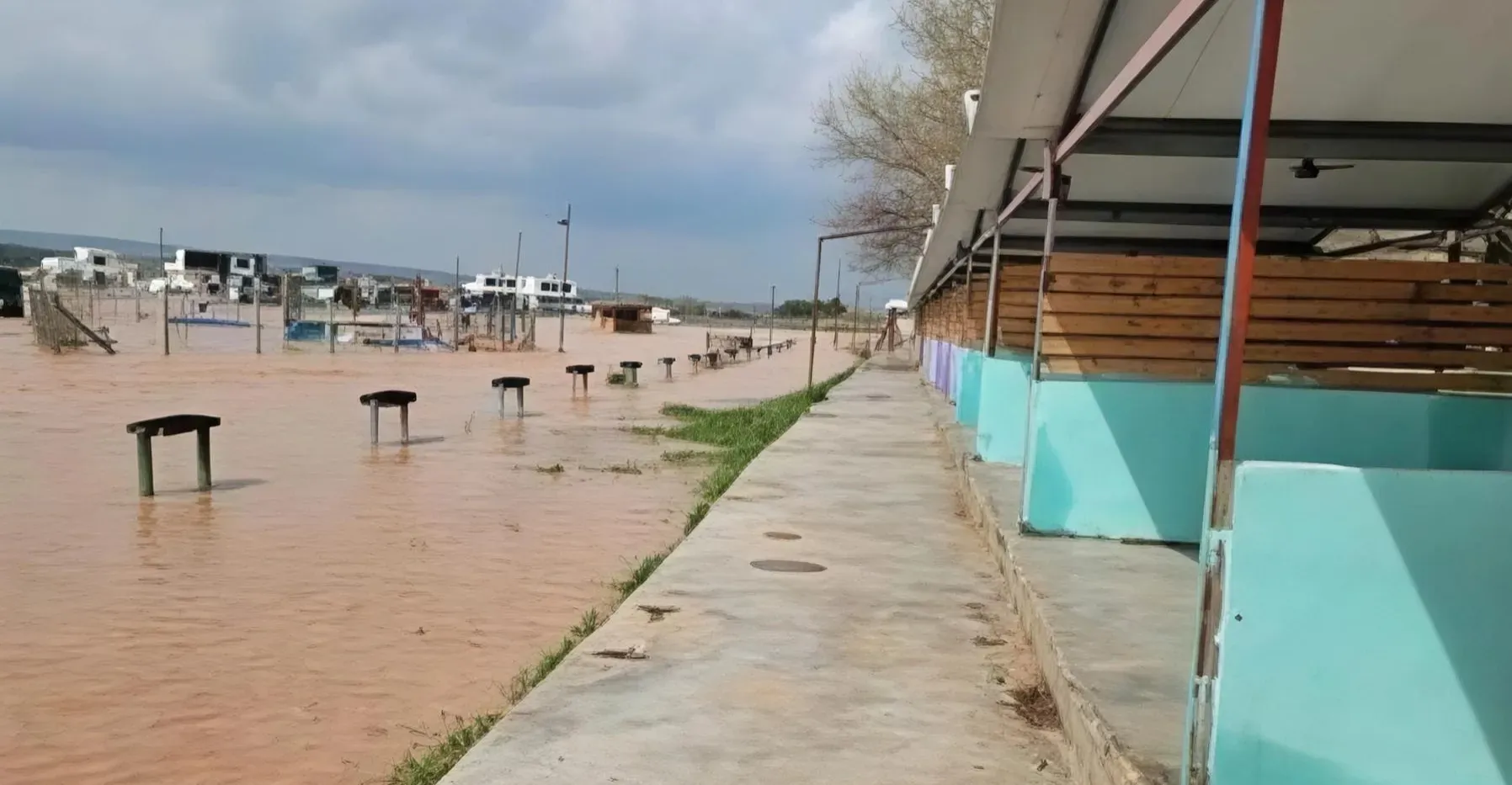
Across affected provinces, the rains damaged infrastructure, disrupted transport corridors, and strained drainage systems. Weather authorities warned that unstable spring conditions are expected to persist in the coming days, raising the risk of further flooding, particularly in low-lying and river-adjacent areas.