Shafaq News – Basra
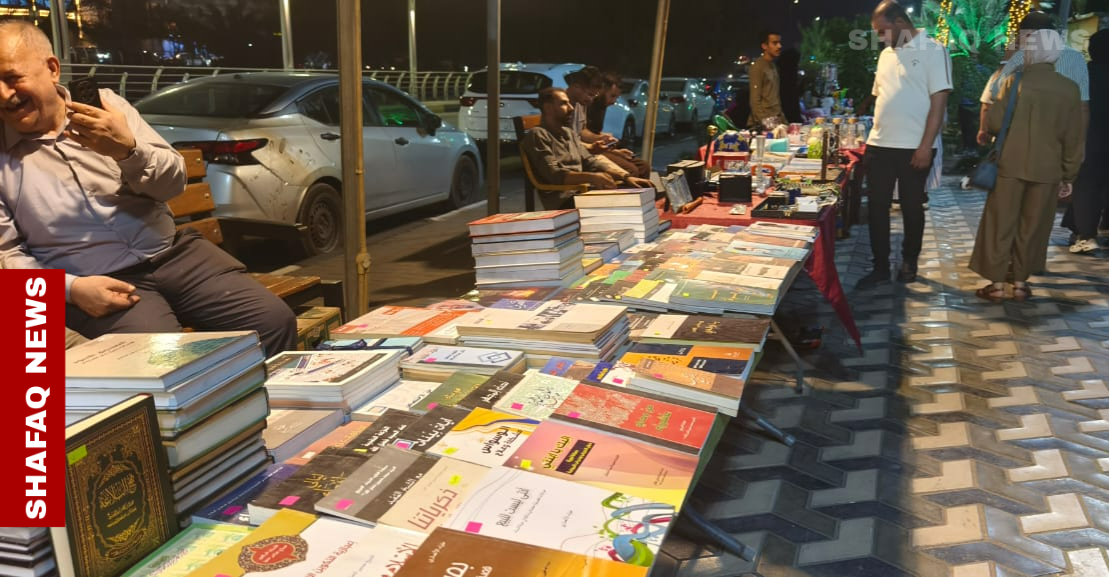
On weekends, Basra’s al-Farahidi Street turns into an open-air festival. Bookstalls spill onto the pavement, painters line the sidewalks with canvases, and oud melodies drift between kiosks where students haggle for novels and families search for children’s stories.
The street, founded in 2015 and named after the Basran scholar al-Khalil ibn Ahmad al-Farahidi, began modestly. It flourished only in 2022, when local authorities built 14 wooden kiosks for booksellers and encouraged artists to claim the surrounding space.
Since then, al-Farahidi has grown into Basra’s answer to Baghdad’s al-Mutanabbi Street, long a hub of Iraq’s literary life. “We no longer need to travel north for this,” veteran artist Sabri al-Maliki told Shafaq News, recalling his early years of hauling paintings to Baghdad. “Basra finally has its own cultural heartbeat.”
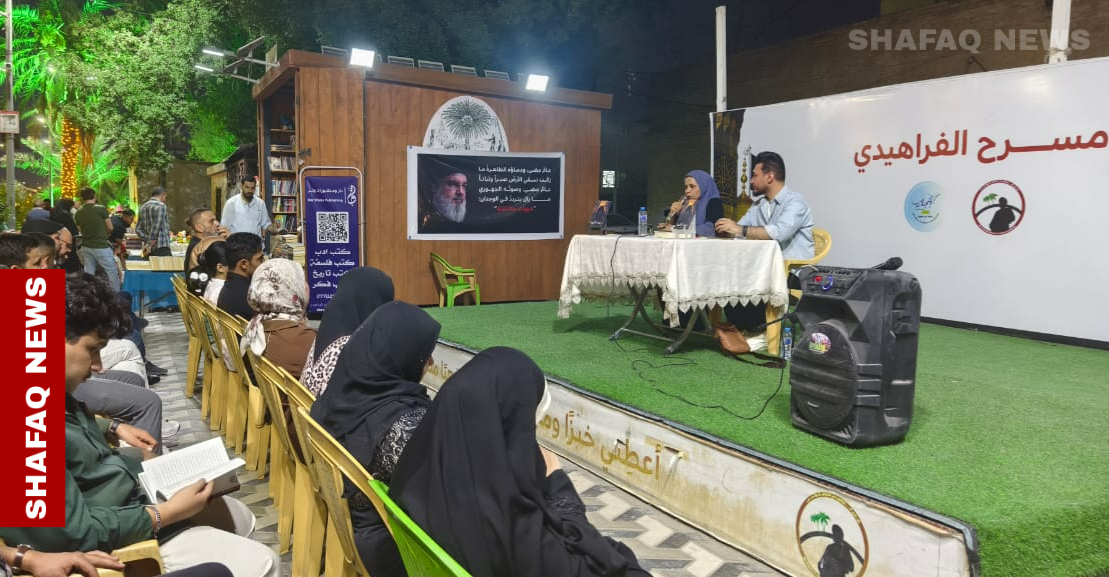
Organizers say the street was never meant to be just about books. Theater groups use its stage for evening debates and plays, musicians play to passersby, and artisans sell hand-carved trinkets alongside first editions. “It’s a space where literature, art, and music breathe together,” organizer Safaa Dhahi expressed.
Bookseller Ahmed al-Kateb pointed to the variety of faces in the crowd: “Students searching for references, readers chasing novels, parents trying to plant a love of books in their children. Everyone finds something here.”
For many in Basra, the street has become more than a marketplace. It is a reminder that their city, once famed across the Arab world for poets and scholars, still has the power to gather people around ideas. “This place is Basra’s spirit,” a young visitor told our agency, clutching a new volume of poetry. “It shows that culture is not a luxury. It’s life itself.”