Shafaq News
Just half an hour from downtown Washington, hidden deep in the forests of Virginia, lies the US Marines’ Basic School at Quantico—a factory for future officers.
In this secluded training ground,
far removed from any real city, Shafaq News correspondent gained rare access to
a place where sunlight falls on concrete walls, gravel-strewn dirt roads, and
scattered bullet casings. At first glance, it looks like a ghost town. Yet
behind the eerie silence lies a meticulously built “urban combat city,” designed
to mimic war-torn streets resembling Baghdad or Mosul. The effect is heightened
by signs written in Persian, adding both unsettling realism and a strange sense
of dislocation.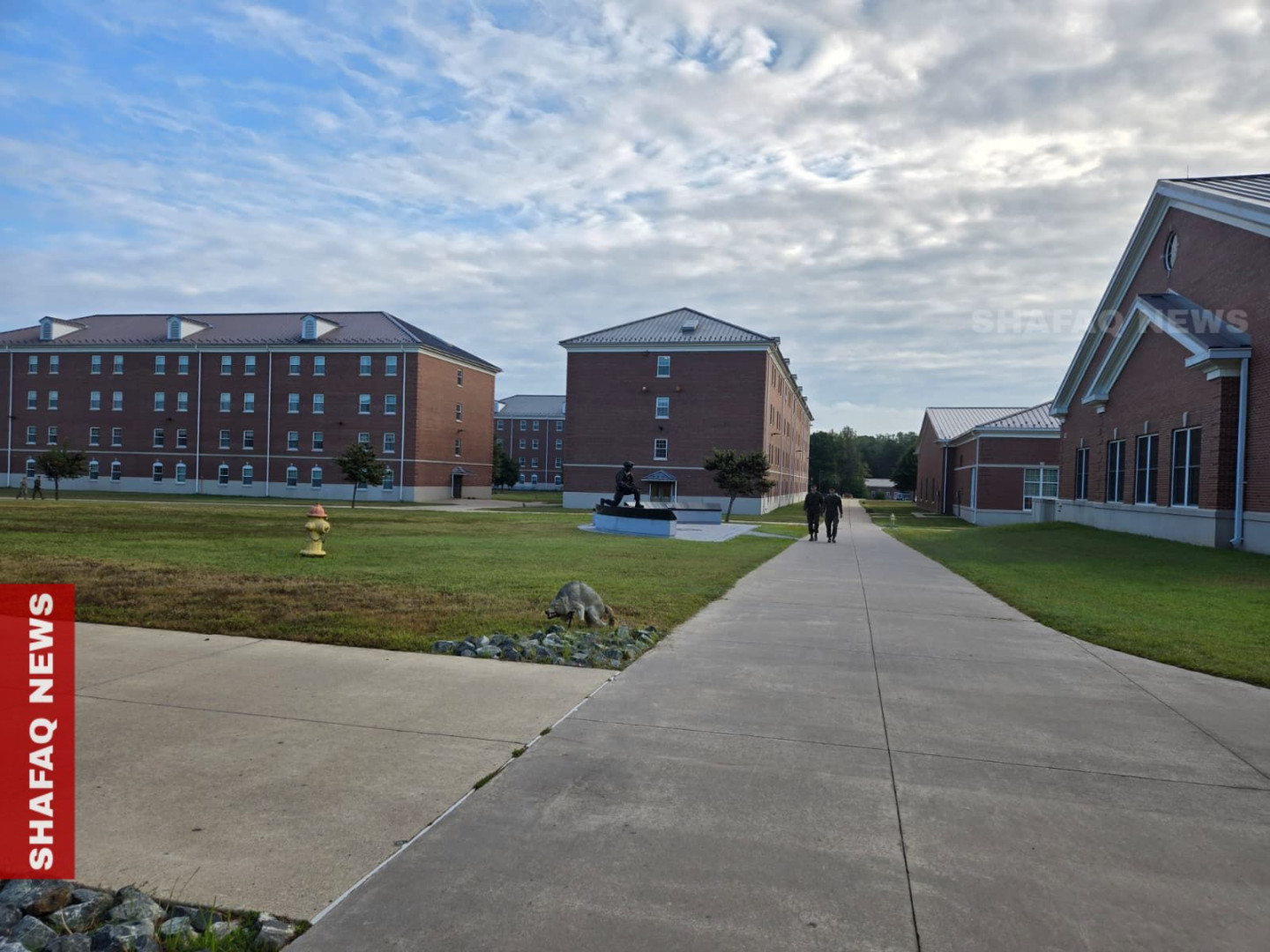
Inside an orderly administrative
building, clean uniforms and shiny shoes contrasted sharply with the
dust-choked training grounds outside. There, Operations Director Major
Makowski—who served three tours in Iraq, including the bloody 2004 battle of
Fallujah—spoke about the philosophy of the school: “conviction, competence, and
character.” Rather than recounting victories, he reflected on the silent enemy
that defined his war experience: improvised explosive devices (IEDs). “What
these young officers face today with drones,” he explained, “is exactly what we
faced with IEDs—an unpredictable threat where your first mistake might be your
last.”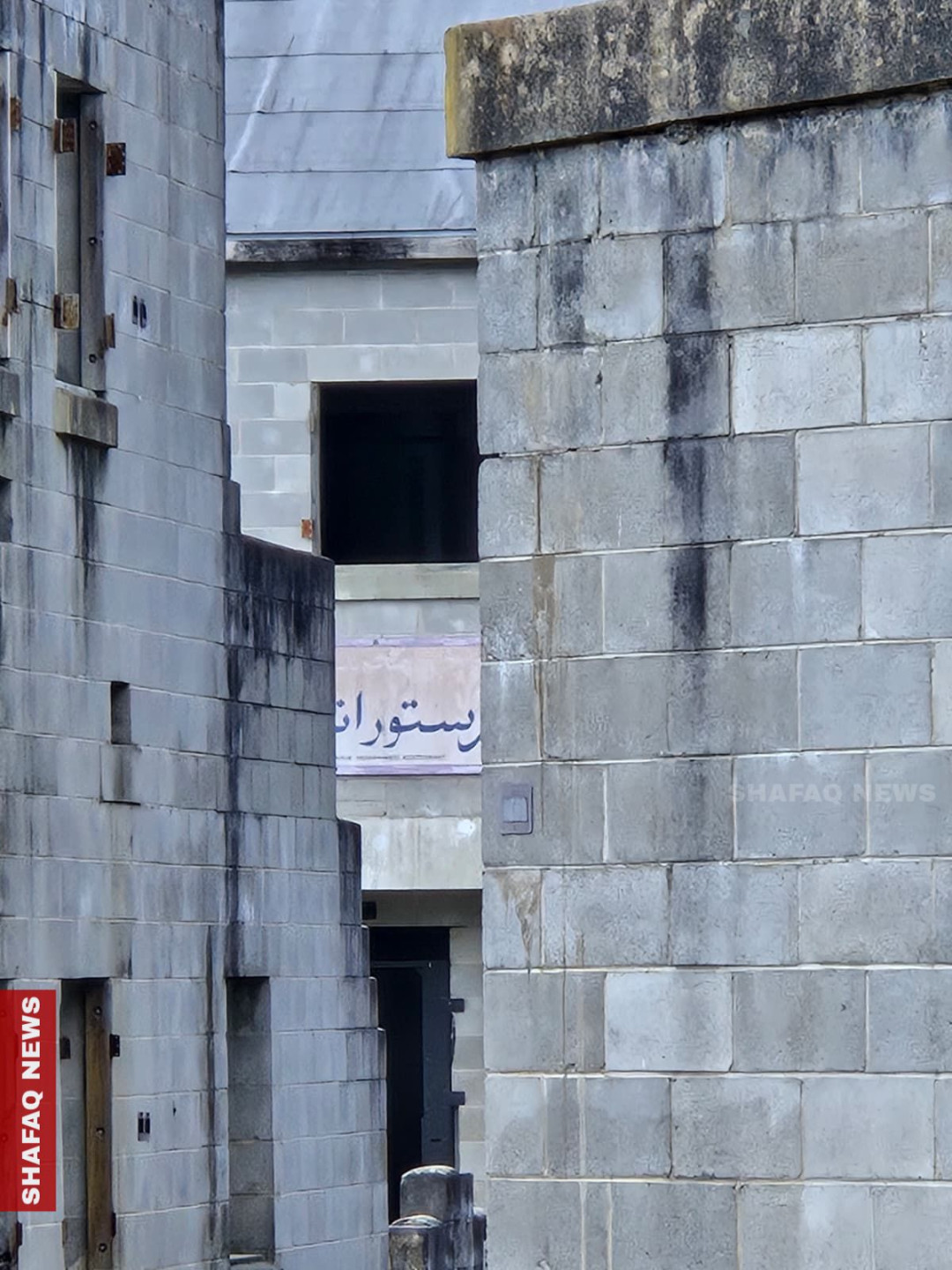
Outside, hundreds of officer
candidates were running drills or spreading across the grounds. For Makowski,
“character remains the most accurate predictor of success. The Marine Corps
doesn’t just want fighters; it wants leaders who can wield lethal force while
staying true to society’s values.”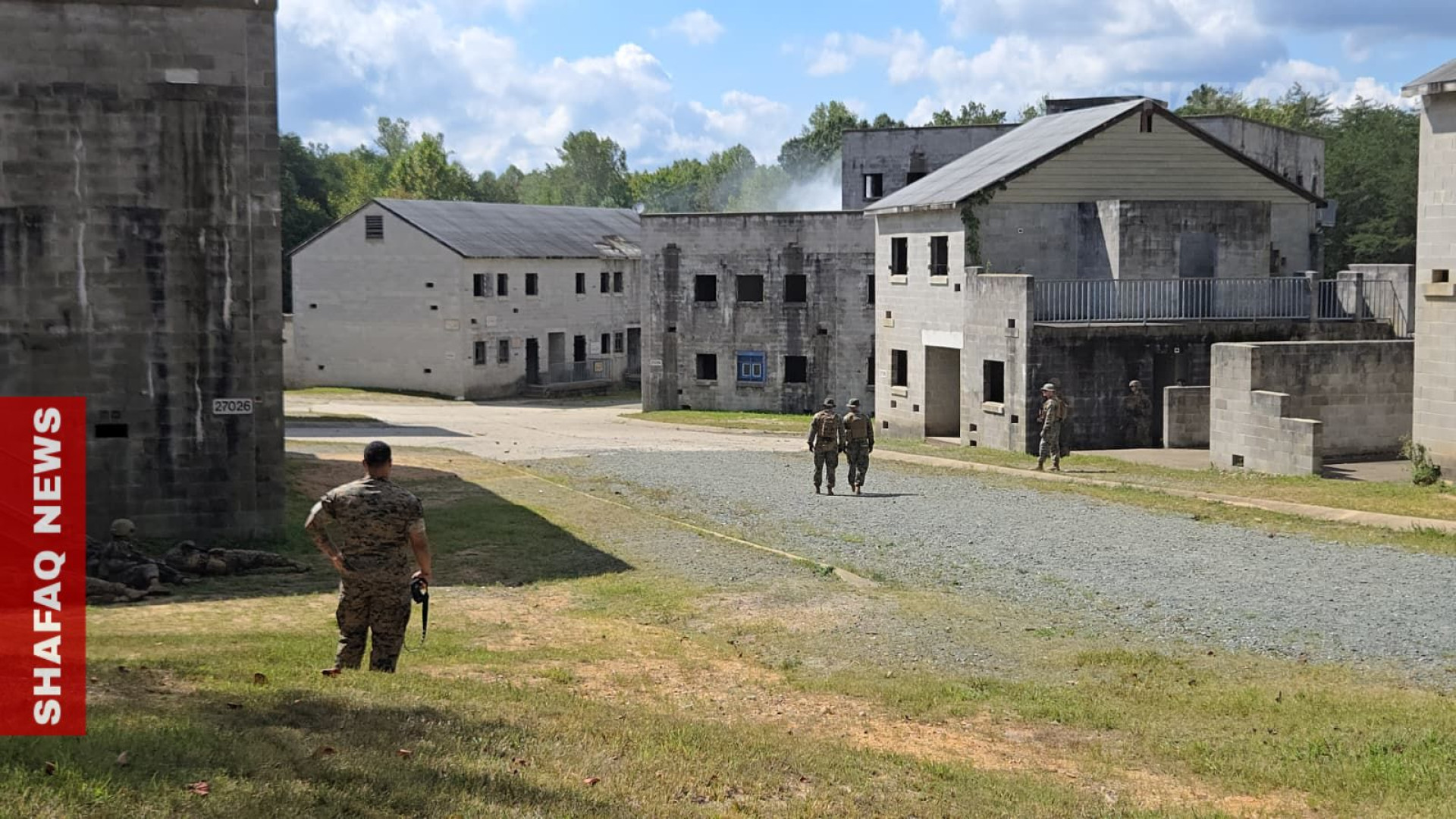
After a fifteen-minute drive within
the base, the illusionary city came into view. Here, dust coats uniforms and
boots so thickly that it seems the trainees had just returned from Iraq’s al-Anbar
desert. This dust is more than dirt—it is the shared language of soldiers
across continents. The city is not merely a firing range but a laboratory for
chaos: a place to test how officers respond to the dilemmas of real wars, where
the line between combatant and civilian is razor-thin.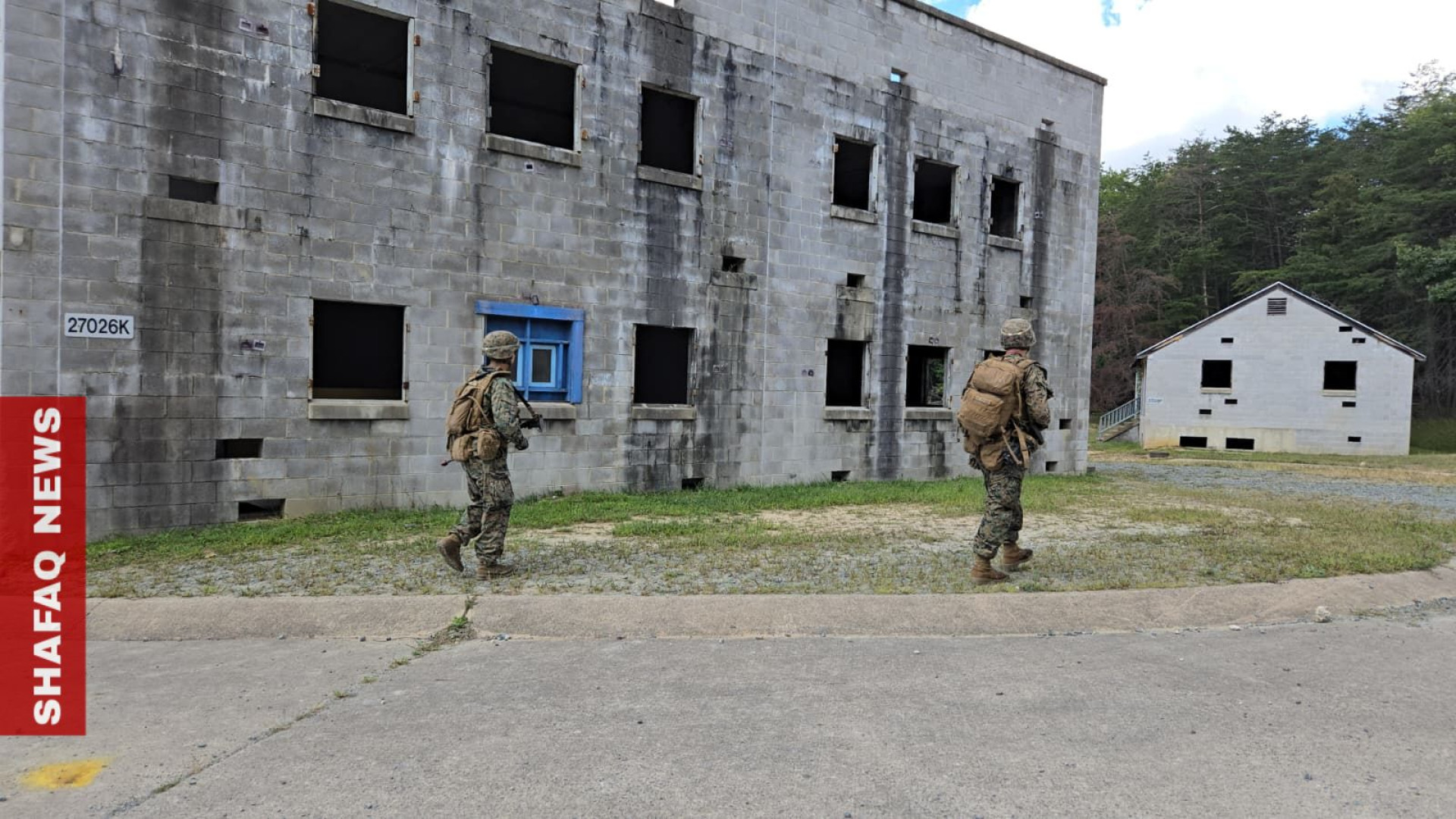
Captain Micah Thomas, commander of Charlie
Company, described the training: “Urban combat is the advanced stage. It takes
students from the simplicity of forest fighting to the complexity of a
three-dimensional environment full of windows and corners.” The scenario
features a fictional adversary called the “Central Revolutionary Force.” “It’s
not about fighting a specific country,” Thomas explained, “but about creating a
narrative with realistic threats, so their enemy evolves as they do.”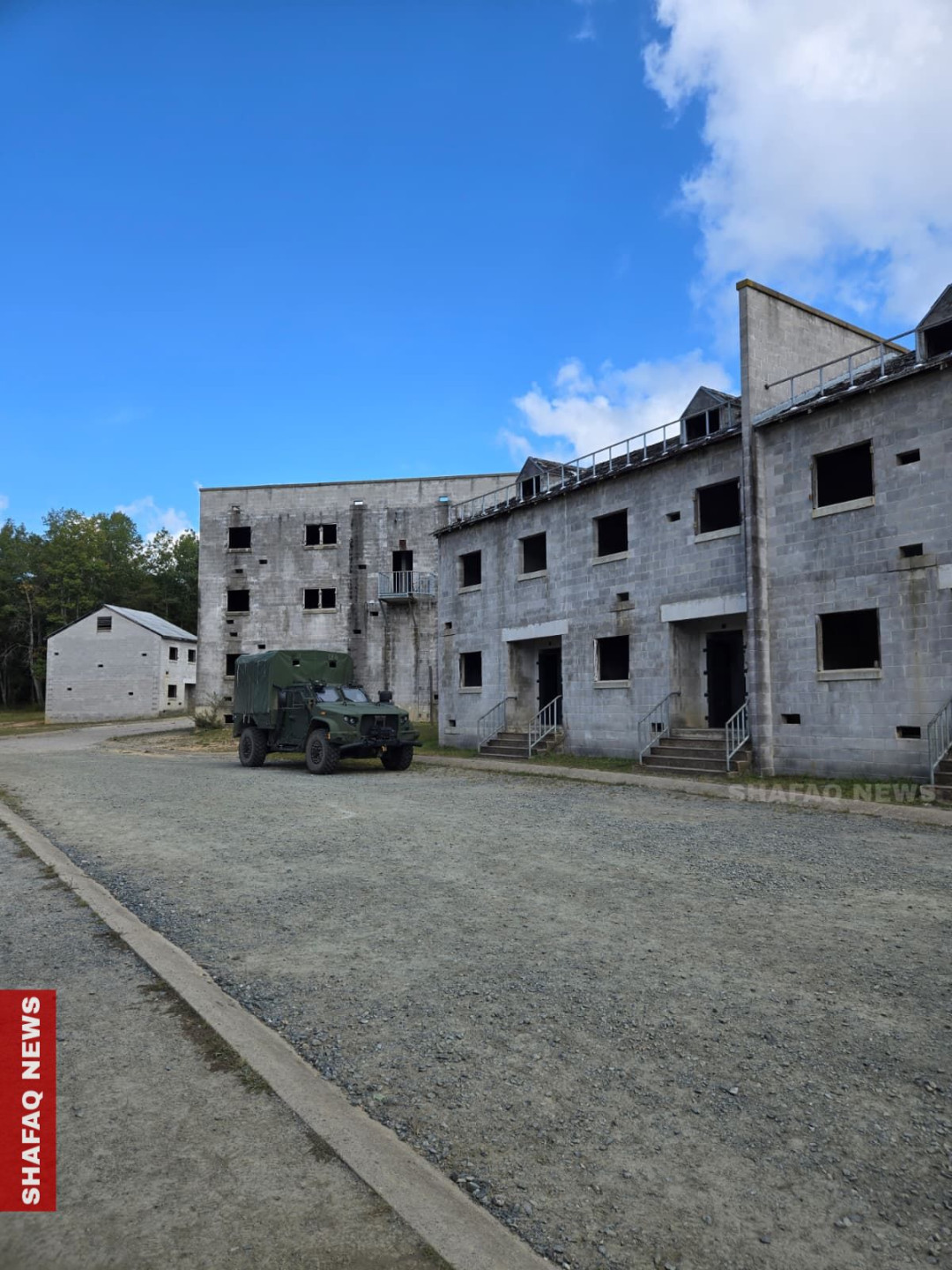
The core of the training is the
“urban assault cycle”: reconnaissance, isolation, gaining a foothold, and
seizing the objective. When asked about the Middle Eastern-style buildings and
Persian writing, Thomas was pragmatic: “A building is a building—whether made
of mud in Iraq or concrete here. The principles don’t change.”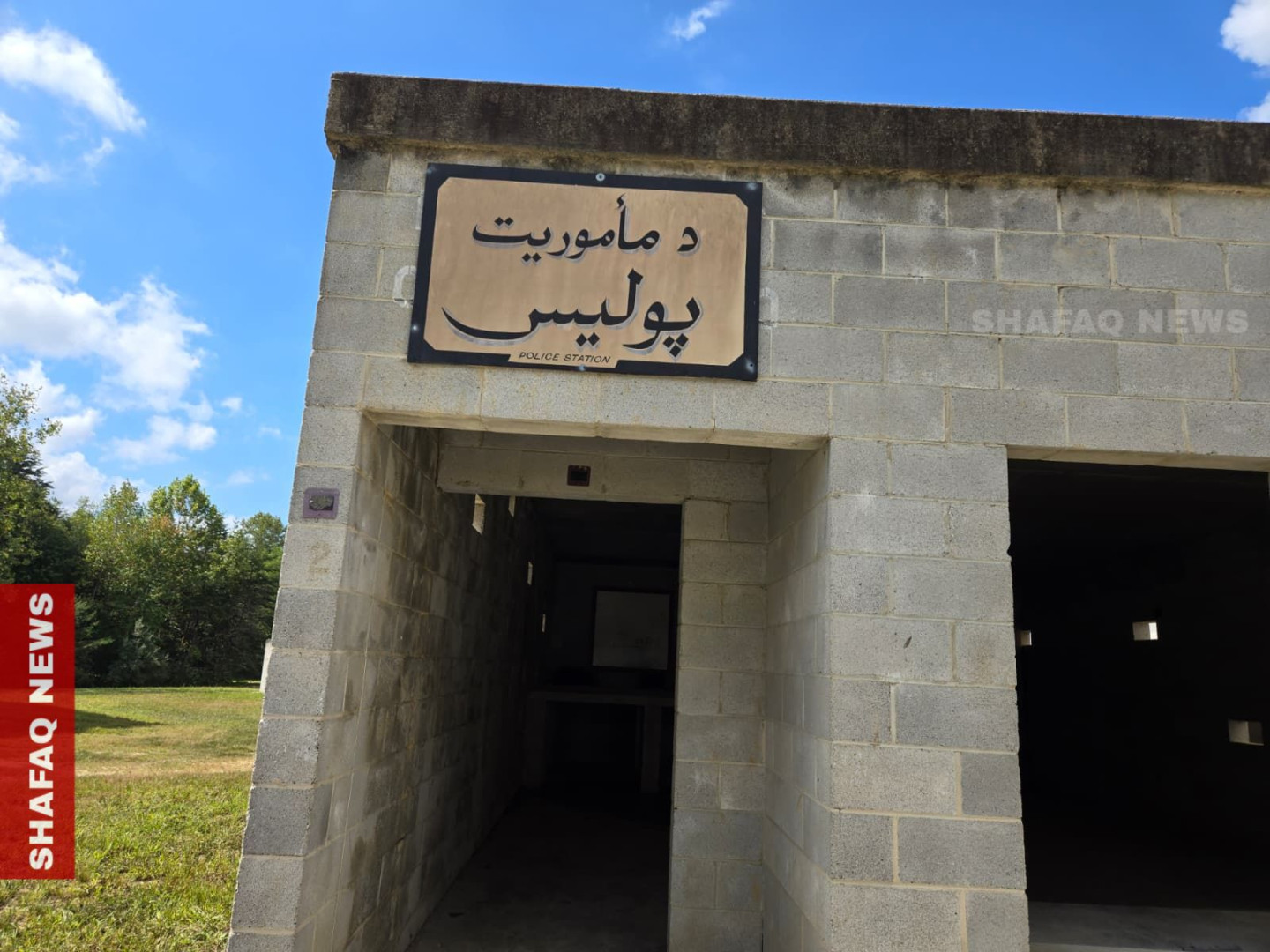
But he stressed the ethical
dimension: recruits study the law of war and the Geneva Conventions early. “We
place them in scenarios with civilians or mosques that must not be touched,
under strict rules of engagement. The goal is to teach discipline as much as
combat.”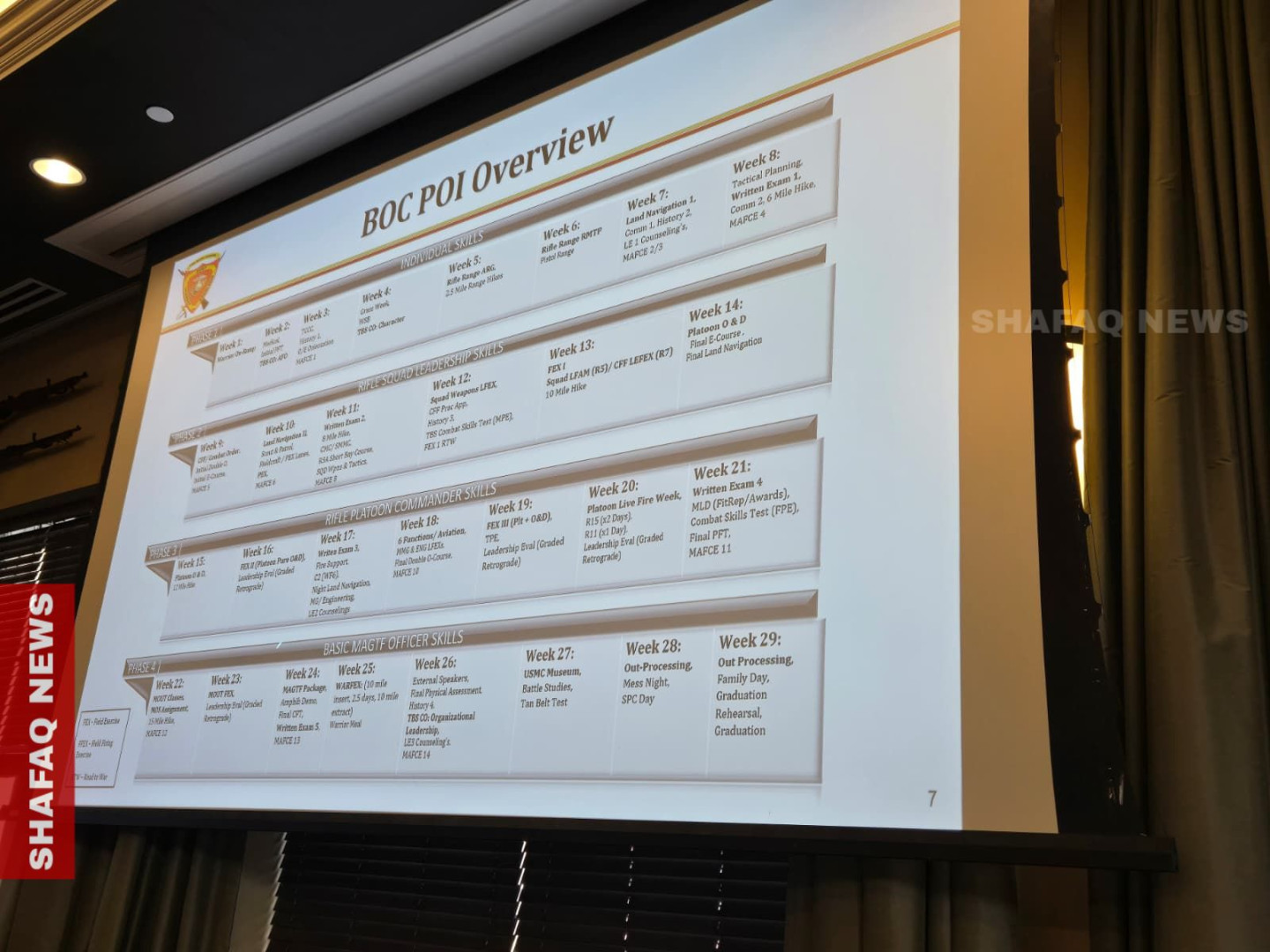
To reach this level, Captain Oliver
McKellips, the lead instructor, explains that trainees progress through the “crawl–walk–run”
method. They wear full protective gear: Kevlar helmets, third-generation body
armor, and combat belts. Their weapons fire blanks, their grenades are
smoke-filled, and their rockets are replicas—but the chaos feels real.
Explosions echo, smoke blinds, and instructors scream “casualties” to force
split-second decisions.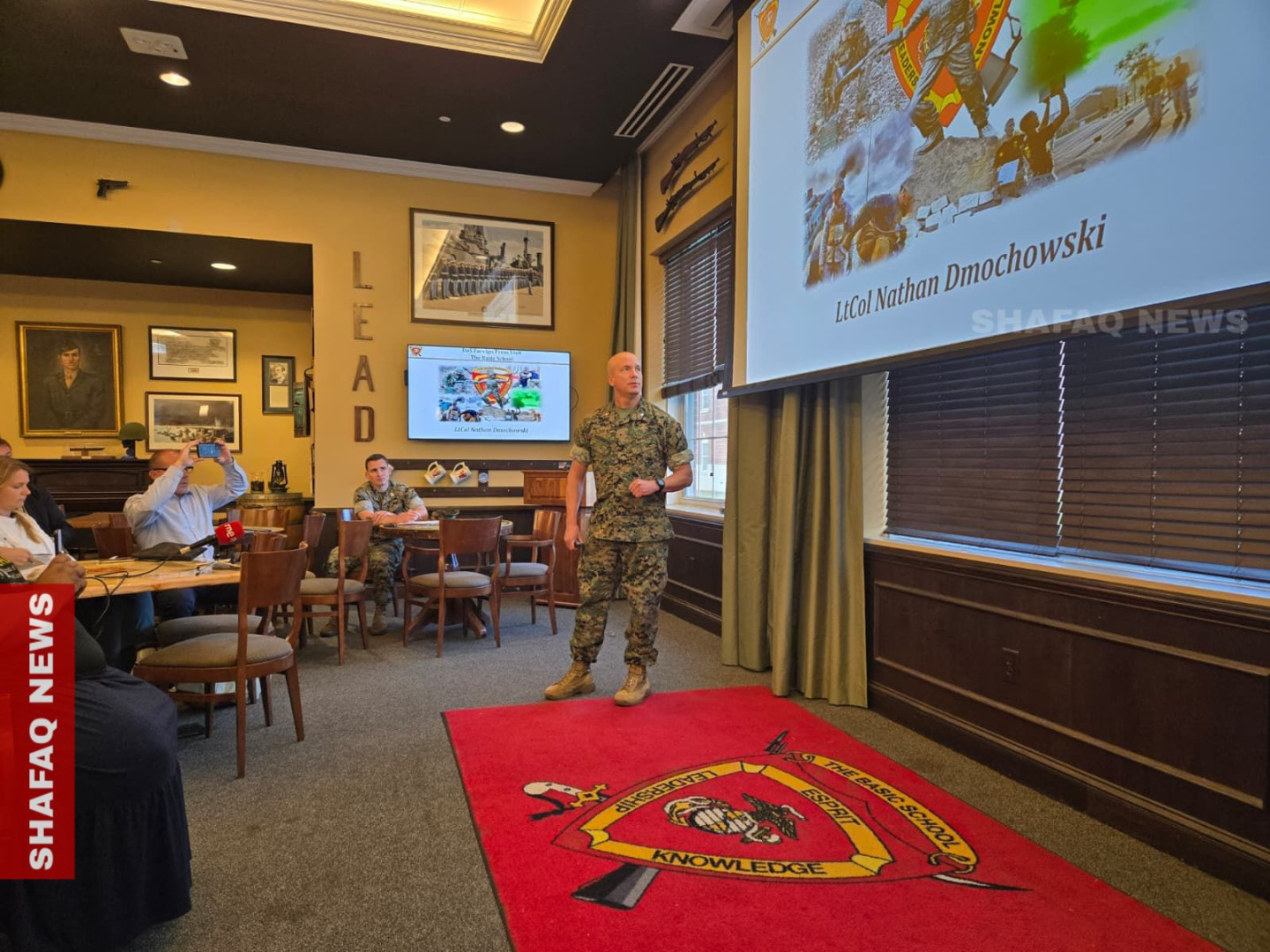
Every year, 1,800 new lieutenants graduate after six months of relentless physical and psychological pressure. They march long distances carrying loads half their body weight, sleep in the open under rain, and spend weeks in “24-hour tactical scenarios” where a third must stay awake on guard while the rest snatch fragments of restless sleep.
For Shafaq News, Mustafa Hashem, Washington, DC.