Shafaq News
Under the golden lights of the historic Kufa Mosque in Najaf province, worshippers gather before sunset during Ramadan, reciting the Quran and raising prayers in a moment of calm that contrasts sharply with the tense regional backdrop of war stretching from Iran to Israel and the United States.
Inside the mosque’s courtyards and around the shrine of Muslim bin Aqeel in the city of Kufa, thousands of visitors from across Iraq and several Asian countries spend the final minutes before the Maghrib call to prayer in devotion. Worshippers sitting in circles reading the Quran, and volunteers prepared simple iftar meals for fasting visitors.
After sunset, the faithful perform Maghrib and Isha prayers before visiting the shrine, continuing a Ramadan tradition that draws thousands to one of Iraq’s most prominent religious landmarks.
Across Iraq, similar scenes of solidarity and generosity unfold each evening as communities organize volunteer initiatives to help fasting people break their fast —moments that capture the country’s enduring social cohesion even as regional tensions intensify.
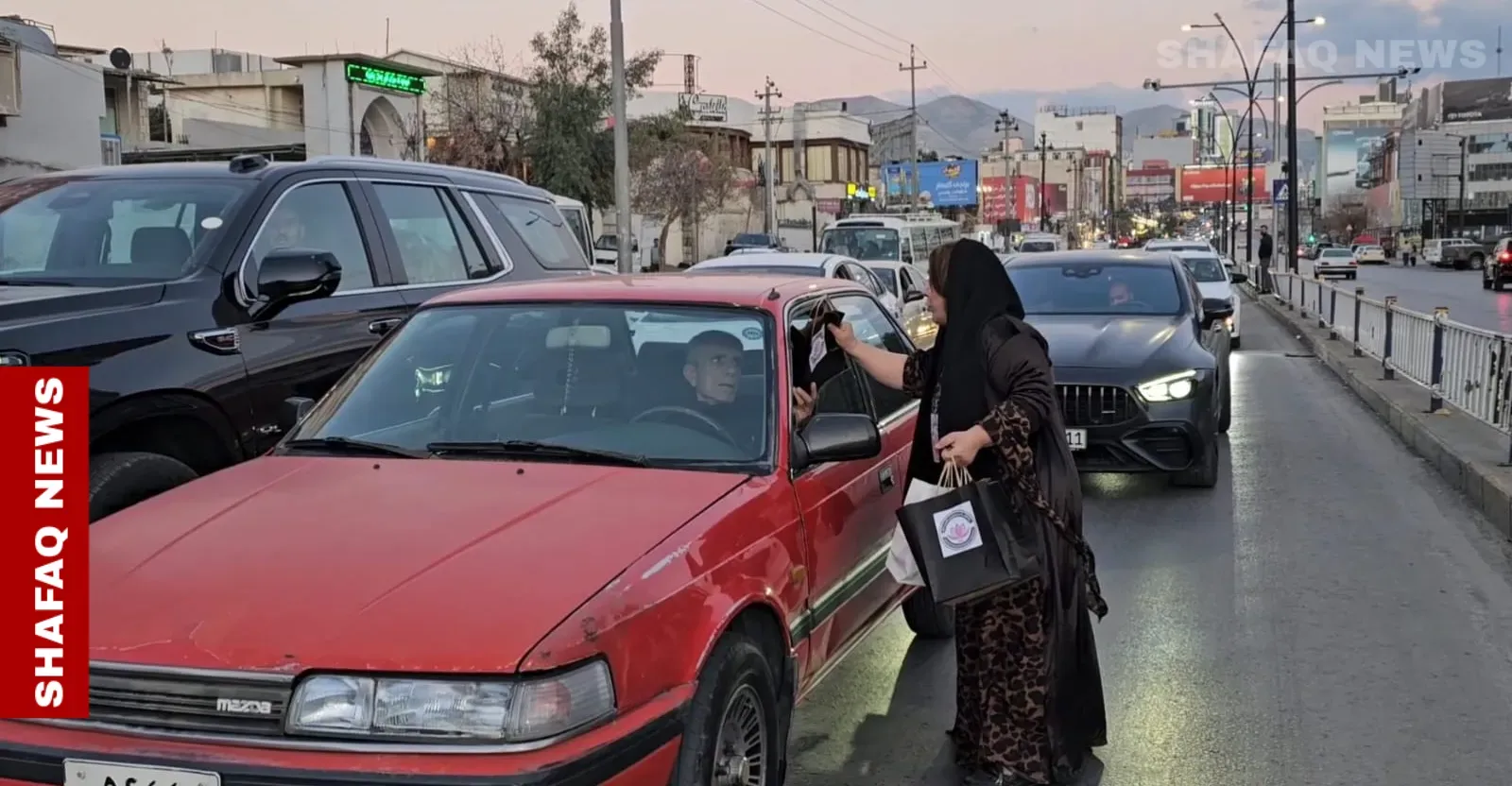
In Al-Sulaymaniyah of Iraqi Kurdistan, the local organization Bela has spent the entire month distributing quick iftar meals to fasting people stuck on the streets at sunset, including travelers, workers, and commuters unable to reach their homes in time for the evening call to prayer.
Volunteers spread out across busy intersections and main roads shortly before sunset, handing out packaged meals so fasting people can break their fast on time.
Azima Hassan, the project supervisor, told Shafaq News that what makes this effort special is that many of the volunteers are elderly people who continue to participate actively in community service, noting that volunteer teams begin preparations well before sunset, assembling meals containing essential food items that allow fasting people to break their fast with dignity. Distribution continues until the Maghrib call to prayer at locations with heavy pedestrian and vehicle traffic.
Meanwhile in Baghdad, volunteer teams are organizing large communal iftar tables that bring together hundreds of people from different backgrounds, reinforcing a sense of unity during the holy month.
Ismail Marzouq, head of the Al-Adhamiya Emergency Team and supervisor of a daily iftar campaign, told Shafaq News that the initiative relies entirely on donations from residents of Al-Adhamiya and nearby neighborhoods without any government or political support.
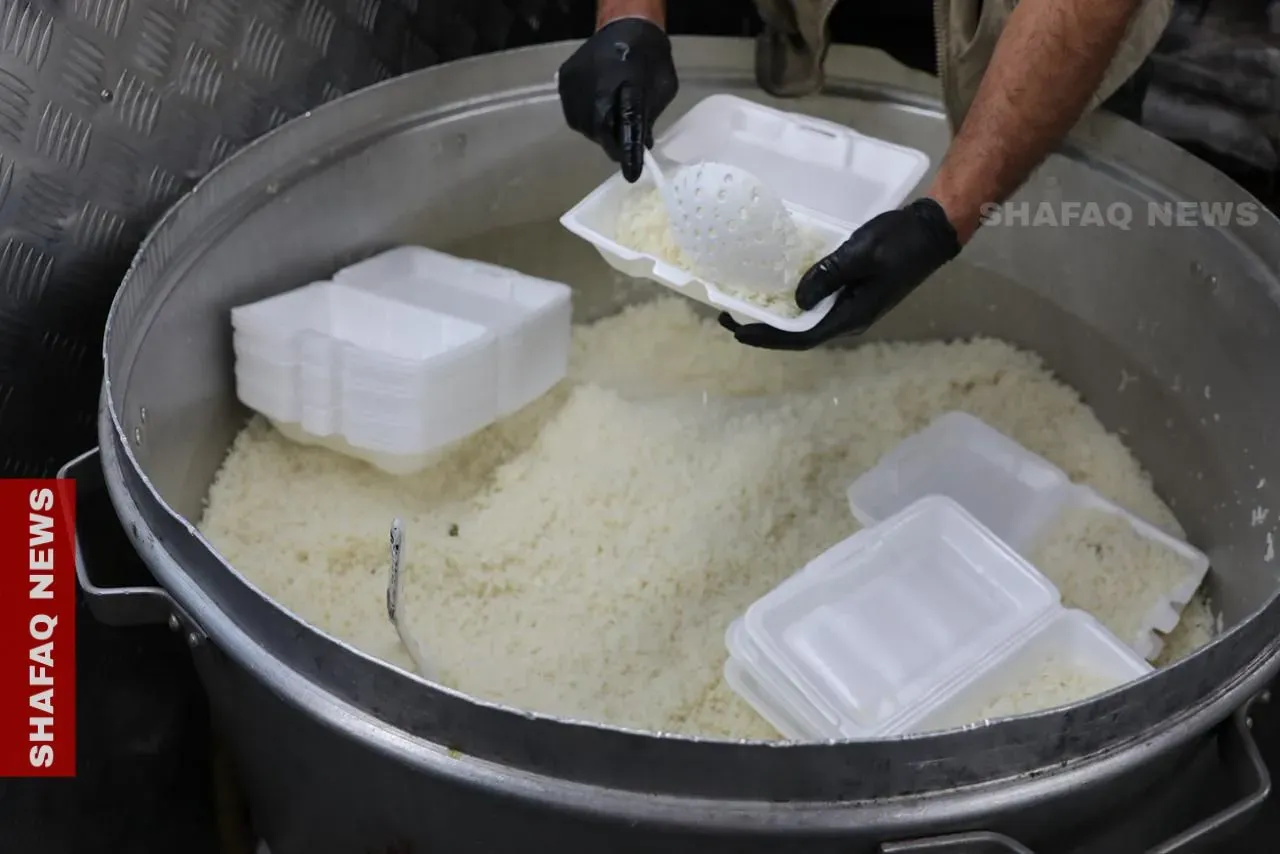
Residents contribute essential food supplies such as rice, dates, and cooking oil used to prepare the meals, he said.
According to Marzouq, volunteers prepare and distribute between 800 and 1,000 iftar meals each day to fasting people traveling between the al-Adhamiya and al-Kadhimiya districts at sunset.
“The communal table brings together different segments of Iraqi society under one call to prayer,” he said, adding that the main goal is to strengthen social ties and reinforce values of solidarity and compassion.
Abdulrahman Muslim, one of the beneficiaries, said he regularly attends the communal iftar with his family because of the welcoming atmosphere and the variety of meals offered.
“The table serves excellent food every day and has become a place where families gather in a comfortable environment that strengthens the sense of belonging,” he said.