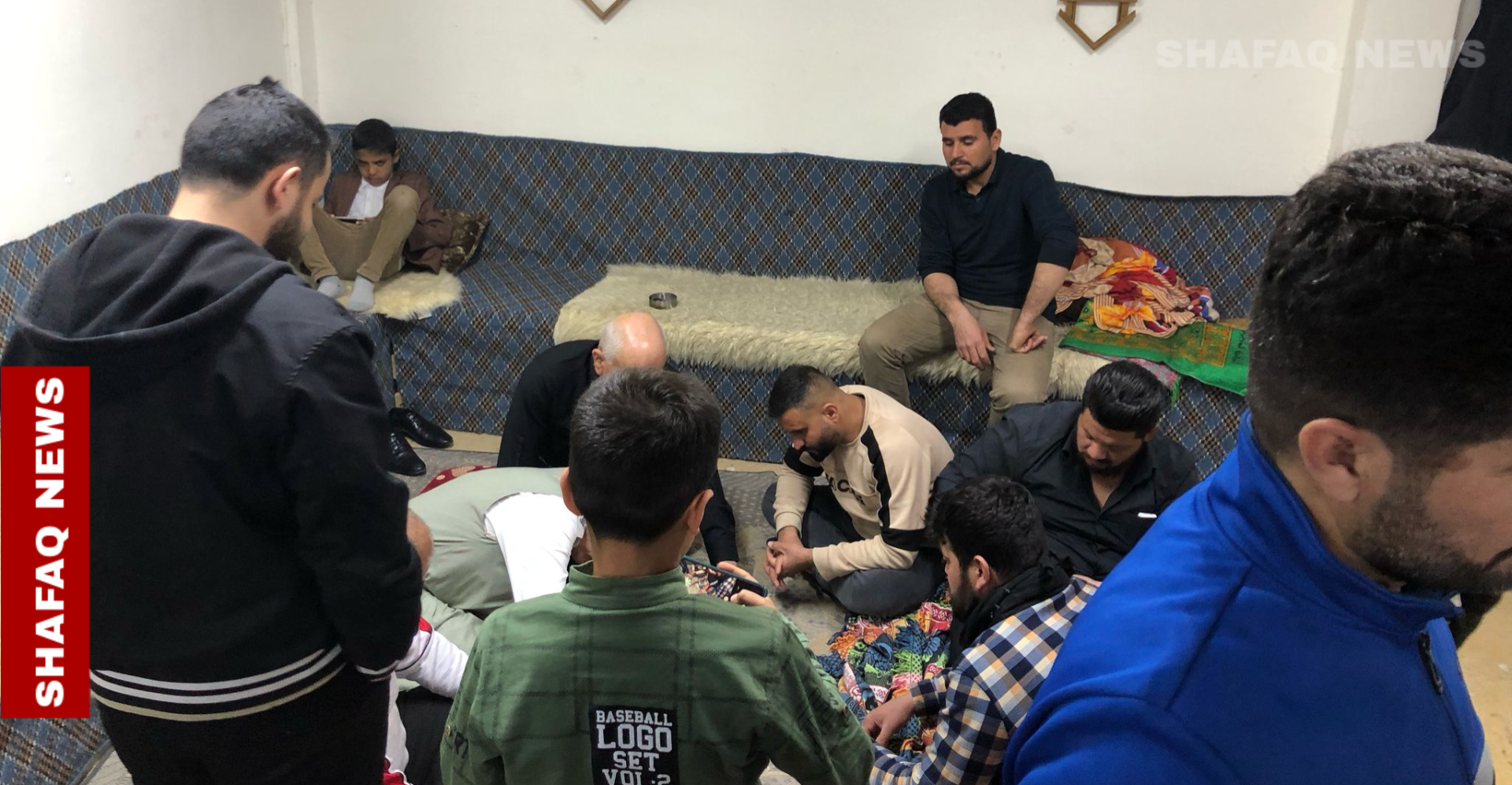
Shafaq News/ In Kirkuk, near the old courthouse, the Café for the Deaf and Mute serves as a crucial gathering place for Iraq’s hearing-impaired community. The first of its kind in the province, it attracts visitors from across the country, offering an environment where sign language fosters connection and inclusion.
Unlike traditional cafés filled with conversation, this space is defined by the rhythmic clatter of domino tiles and the soft tapping of teacups. Abdul Sattar Khudair, 31, a regular visitor, finds solace in the café. Married to a deaf woman, he struggled to secure hearing aids for their children. After years of personal and family hardships, his marriage ended, and the café became a cornerstone of his daily life.
Limited Government Support and Social Challenges
Despite the presence of approximately 13,000 individuals with disabilities in Kirkuk, including 1,000 who are deaf and mute, official support remains scarce. Speaking with Shafaq News Agency, Mohammad Hussein, a social researcher specializing in disability issues, highlights the lack of government initiatives to assist this demographic.
“The Café for the Deaf and Mute is a rare and vital space for this community,” Hussein affirmed.
Many disabled individuals in Iraq face bullying and social exclusion, often leading them to withdraw from public life. The café provides a safe alternative, allowing visitors to build connections and find community support. Social researcher Abdul Karim Khalifa sees the establishment as more than just a café—he describes it as a “living memory of Kirkuk,” uniting generations of deaf and mute individuals and preserving a unique cultural space.
“It is one of the significant places in the city’s history, and I visit from time to time to document the lives of those who gather here,” Khalifa told Shafaq News Agency.
Beyond providing social support, the café has become a cultural and religious center, particularly during the holy month of Ramadan. the café’s owner Ahmed Fadil explains that visitors from Erbil, al-Sulaymaniyah, and Kirkuk gather here for collective prayers and traditional games like ‘Siniya,’ making it a unique space for shared experiences.
“It’s an opportunity for them to bond and engage in religious activities,” Fadil noted.
One visitor, Mohammed Khaled, underscores the café’s unifying role, noting to Shafaq News that “sign language brings people together regardless of ethnicity or sect.”
Café worker Ahmed Abdul Jabbar, who
is not hearing-impaired, has spent three years learning sign language to
communicate with customers. The café sees a steady flow of visitors throughout
the day, whether they come before work or during periods of unemployment,
according to him, which reinforces its role as a crucial support hub rather
than just a business.