Shafaq News
By the end of 2025, protests no longer function as a decisive lever of power within Iraq’s political system. Demonstrations have resurfaced across multiple provinces, but none have approached the scale, cohesion, or political impact of the October 2019 uprising. Instead, the year closes with a protest landscape shaped by economic grievances and localized pressure, confronting a political order that has grown increasingly adept at absorbing unrest without yielding structural change.
Persistent demonstrations continue to erupt, driven by unfulfilled promises, chronic governance failures, and a widespread sense of economic insecurity. Iraqis return to the streets to reclaim rights they believe have steadily eroded. Yet the last moment of national rupture remains Tishreen 2019, when protesters demanded a sovereign state free from corruption, uncontrolled weapons, and external agendas—and faced lethal force in response.
Nasser Karim, a political opposition figure and protest movement activist, told Shafaq News that years of accumulated disappointment are pushing society toward a different form of unrest. He warned that poverty, unemployment, and institutional dysfunction could generate instability unlike previous protest cycles. “There will be exclusion, and then there will be correction,” he said, reflecting a broader sentiment as 2025 ends: frustration persists, alternatives remain unclear, and the roots of unrest extend far beyond any single wave of demonstrations.
Fragmented Pressure, Persistent Mobilization
In 2025, protests no longer aim to paralyze the state, but they have not faded. Demonstrations erupted in nearly all provinces, including Basra, Baghdad, al-Sulaymaniyah, Dhi Qar, Najaf, Diyala, Nineveh, and Babil. Their focus was overwhelmingly economic: overdue salaries, delayed entitlements, electricity shortages, and limited access to jobs—particularly in the oil sector.
Most mobilizations now seek to compel authorities to honor long-standing obligations rather than to reshape the political system. Basra offers a clear example. The Contractors Union threatened to block roads leading to major oil facilities with heavy machinery unless accumulated dues and exchange-rate adjustments were paid. Graduate engineers also shut down the Basra Oil Company headquarters and staged sit-ins near key oil fields, pressing for job allocations and greater transparency in hiring.
Elsewhere, protesters blocked roads in Najaf and al-Diwaniyah over poor services and weak accountability by local administrations. Politically framed rallies in Baghdad—responding to foreign airspace violations or expressing solidarity with Gaza—showed that broader issues still resonate. However, none evolved into sustained, cross-provincial campaigns. A ten-day protest ban imposed by the Interior Ministry ahead of a major summit underscored the authorities’ readiness to prevent demonstrations from gaining national momentum at an early stage.
Taken together, 2025 reveals a protest repertoire that remains disruptive but increasingly localized and tactical, while state responses are calibrated to block any convergence into a Tishreen-style mobilization.
oil-tanker routes were not simply reactions to
delayed wages for late 2024 and early 2025. They became instruments of
political pressure on both Erbil and Baghdad amid deepening disputes over
responsibility for public sector payrolls.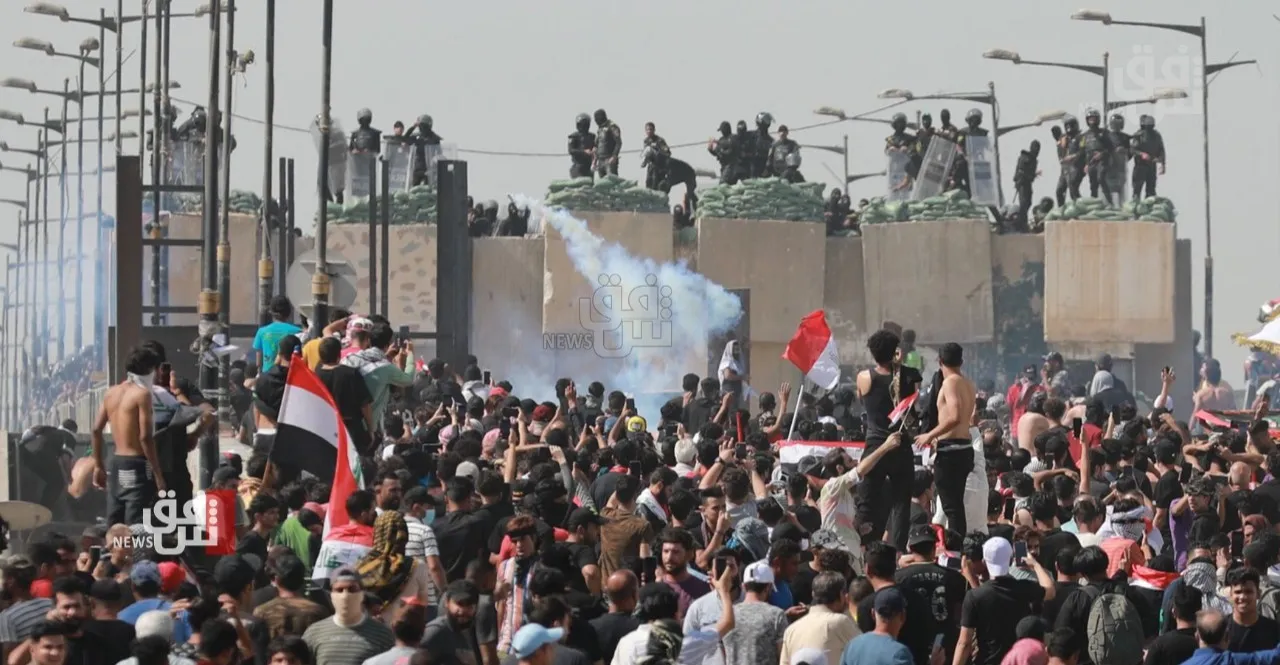
The Paycheck Freeze That Ignited A Region
In al-Sulaymaniyah and across the Kurdistan Region, protests throughout 2025 centered on salary disputes. Early-year strikes, road closures, and sit-ins near
Lecturers, civil servants, health workers, and church-affiliated employees expanded their actions across multiple districts, accusing authorities of turning monthly salaries into bargaining tools. By targeting sites linked to trade and energy transport—roads used by tankers and key administrative buildings—protesters demonstrated a clear understanding of where leverage lies in a resource-dependent economy.
These protests did not seek to unseat either the Kurdistan Regional Government or the federal cabinet. Instead, they aimed to constrain them: enforce payment schedules, clarify fiscal responsibility, and prevent salaries from becoming hostages to political negotiations.
Years That Never Really Ended
The pressures driving mobilizations in 2025 closely mirror those of previous years, underscoring the cumulative nature of Iraq’s protest cycle.
In 2024, unrest over water shortages, unemployment, weak services, and delayed financial entitlements spread across several provinces. In Dhi Qar’s Sayed Dakhil district, residents surrounded a power station and cut electricity to the governor’s residence to force emergency water deliveries—an example of communities leveraging service infrastructure to extract concessions.
In the Kurdistan Region, repeated strikes by teachers and civil servants exposed the same fault line visible in 2025: unstable salary payments and unresolved fiscal relations between Baghdad and Erbil. Other provinces followed a similar pattern—frequent protests with limited political impact.
The same dynamic prevailed in 2023. Contract employees in Baghdad demanded permanent appointments; unemployed graduates in Dhi Qar pressed for oil-sector jobs; and workers in al-Sulaymaniyah and Halabja protested multi-month salary delays. Educators consistently framed their demands as appeals to a basic right to a dignified standard of living.
Across 2023–2025, protests have functioned less as exceptional events and more as a recurring mechanism through which Iraqis attempt to extract minimal performance from state institutions. Wage instability, service collapse, unemployment, and water scarcity remain entrenched governance failures—and protest remains one of the few available tools to challenge them.
Tishreen 2019: The Uprising That Reshaped Power
The October 2019 uprising remains the only protest wave since 2003 to fundamentally disrupt Iraq’s political order. Millions mobilized across central and southern provinces, demanding jobs, services, accountability, and an end to corruption and foreign interference. Tahrir Square in Baghdad became a sustained symbol of civic resistance.
More than 600 protesters were killed, and thousands were injured or detained. Accountability for those abuses remains absent.
Tishreen forced tangible political concessions. Then-Prime Minister Adel Abdul Mahdi resigned, parliament amended the electoral law, and early elections followed. New political forces entered parliament: Emtidad won nine seats, New Generation secured nine, Ishraqat Kanoon took six, and independents captured around 43 seats—roughly one-fifth of the legislature.
Yet by the 2025 electoral cycle, traditional power blocs continued to dominate. Protest-born MPs fractured, failed to build a unified agenda, and struggled to advance reforms against entrenched alliances.
Read more: Iraq's vague Protest Law: A tool for control or a framework for rights?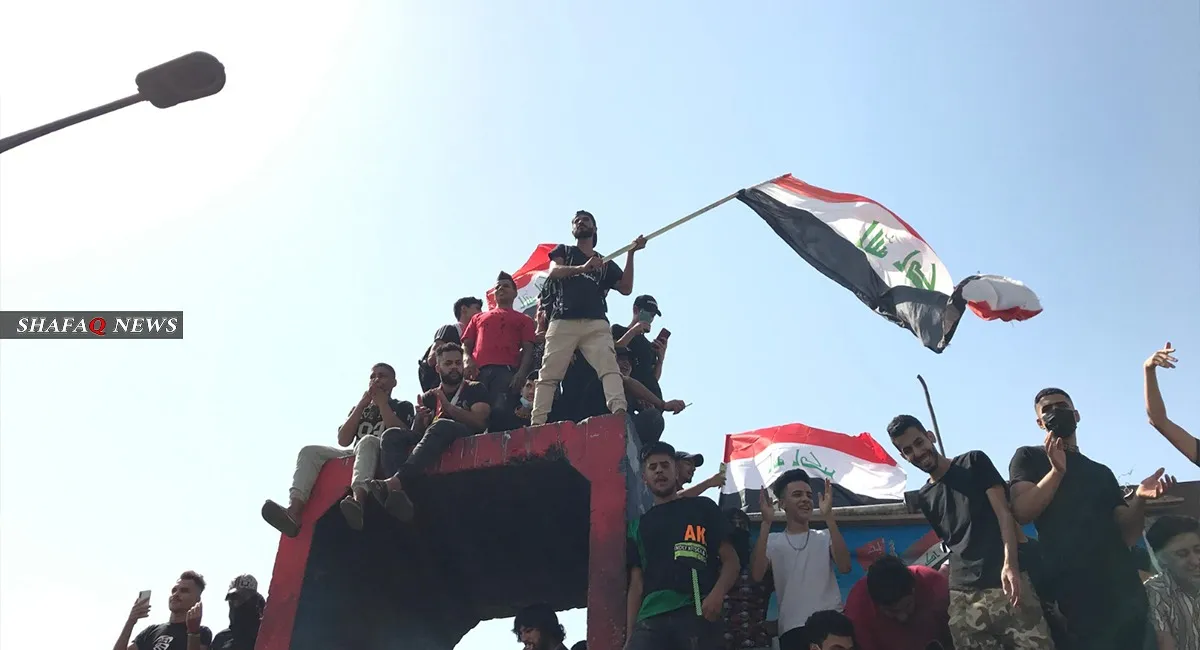
A System That Absorbs Rather Than Yields
By the mid-2020s, the state had internalized the lessons of Tishreen. Annual commemorations now draw hundreds rather than millions. Rights groups warn that proposed protest legislation and expanding security measures could further restrict public gatherings. Authorities increasingly impose pre-emptive bans ahead of sensitive events, while security forces move swiftly to contain protests near strategic economic sites.
Inside parliament, reform-minded lawmakers have failed to maintain cohesion, allowing larger blocs to reassert control. Debates over amendments to the Sainte-Laguë electoral formula have heightened concerns about shrinking space for new political movements.
These trends point to a system comfortable managing localized pressure while preventing the emergence of nationwide mobilization.
Read more: Six years post-Tishreen uprising: Sacrifices outweigh political gain
Government Projects And The “Service Bargain”
The post-Tishreen period has not been devoid of policy initiatives or service projects. Officials frequently point to several flagship efforts as evidence of progress:
-The Dhi Qar Reconstruction Fund, created after the province was declared disaster-stricken, has spent about 1.25 trillion dinars (roughly $950 million) on nearly 400 projects, completing around 250.
-In Basra, the Grand Faw Port has reached approximately 89% completion of its container yard component, with an expected capacity of 3.5 million containers annually.
-Large-scale connectivity plans, including the Development Road and associated rail links, are being promoted as transformative projects intended to reposition Iraq as a regional logistics hub.
While implementation remains uneven and allegations of corruption persist, these initiatives form part of an implicit “service bargain.” Authorities seek to showcase tangible projects to blunt the appeal of mass street mobilization, even as core governance failures remain unresolved.
A Movement At A Crossroads
As Iraq concludes 2025, its protest landscape reflects a central paradox. Demonstrations still extract local concessions, and the legacy of Tishreen continues to shape political discourse. Yet the ability of protests to drive systemic change has narrowed under tighter security controls, elite adaptation, and fragmentation among protest-born political forces.
At the same time, the underlying drivers of unrest—unemployment, salary instability, water scarcity, service collapse, and deep public distrust—remain firmly in place. The question beyond 2025 is whether these pressures will continue to produce fragmented, localized demonstrations or whether they might once again converge into a national wave capable of challenging a political system that has spent six years refining containment.
Written and edited by Shafaq News staff.