Shafaq News – Gaza
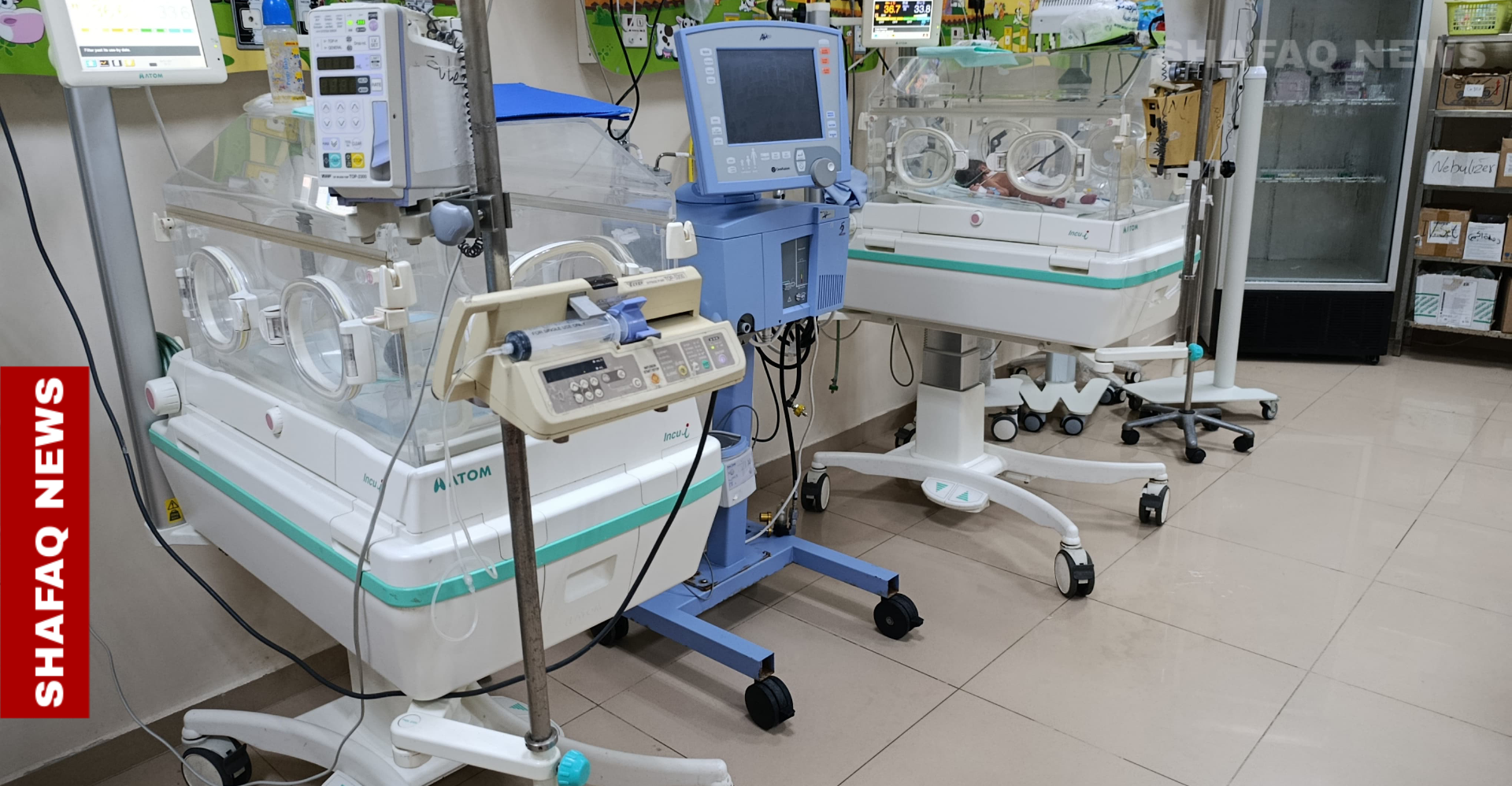
Baby Salman entered the world on August 4, just months after Israel killed his father. Now, barely days old, he lies in an incubator at al-Aqsa Martyrs Hospital, fighting fever, dehydration, jaundice, and an umbilical infection. His aunt, who helps care for him, says they struggle to find even milk or diapers—and when available, prices are far beyond their reach.
Salman does not lie alone. In the cramped neonatal ward, he shares his incubator with other premature infants, their fragile bodies pressed together in a desperate measure, doctors say, sharply raises the risk of deadly infections. Essential medicines, sterile equipment, and temperature control are all in short supply.
Hospitals On The Edge
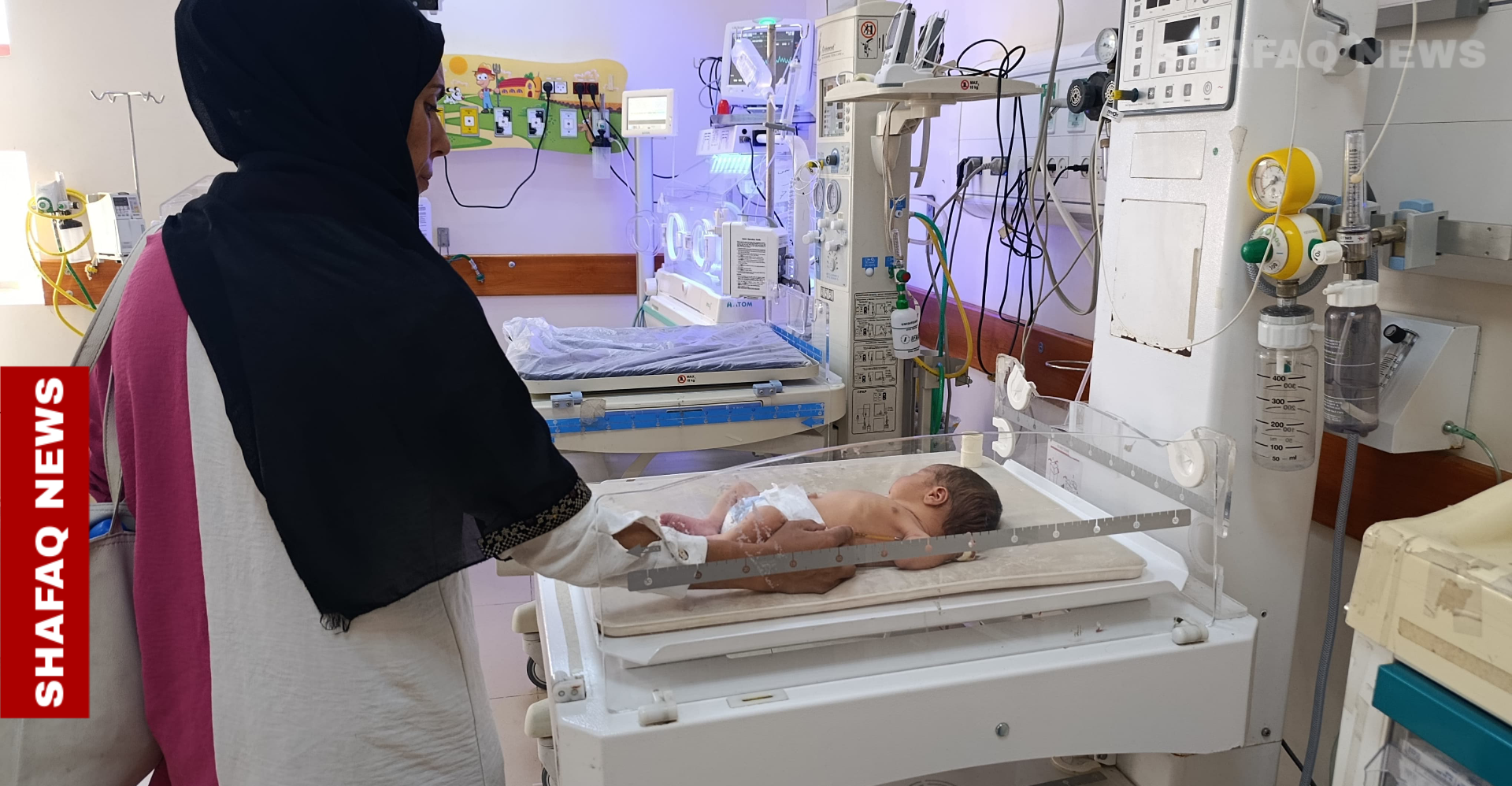
Gaza’s neonatal units are among the hardest hit by the war and blockade. At Nasser Medical Complex, pediatric chief Dr. Ahmad al-Fella said fuel shortages have left life-saving machines running solely on generators. “The shortage of C-PAP devices for premature babies forces staff to decide who receives respiratory support,” he told Shafaq News. “In some cases, three newborns must share a single bed.”
Such choices are agonizing in a place where
every hour without oxygen or heat can decide a newborn’s fate. The lack of
sterile conditions means that minor complications—a skin infection, a small
cut—can quickly become fatal in babies whose immune systems are barely
developed.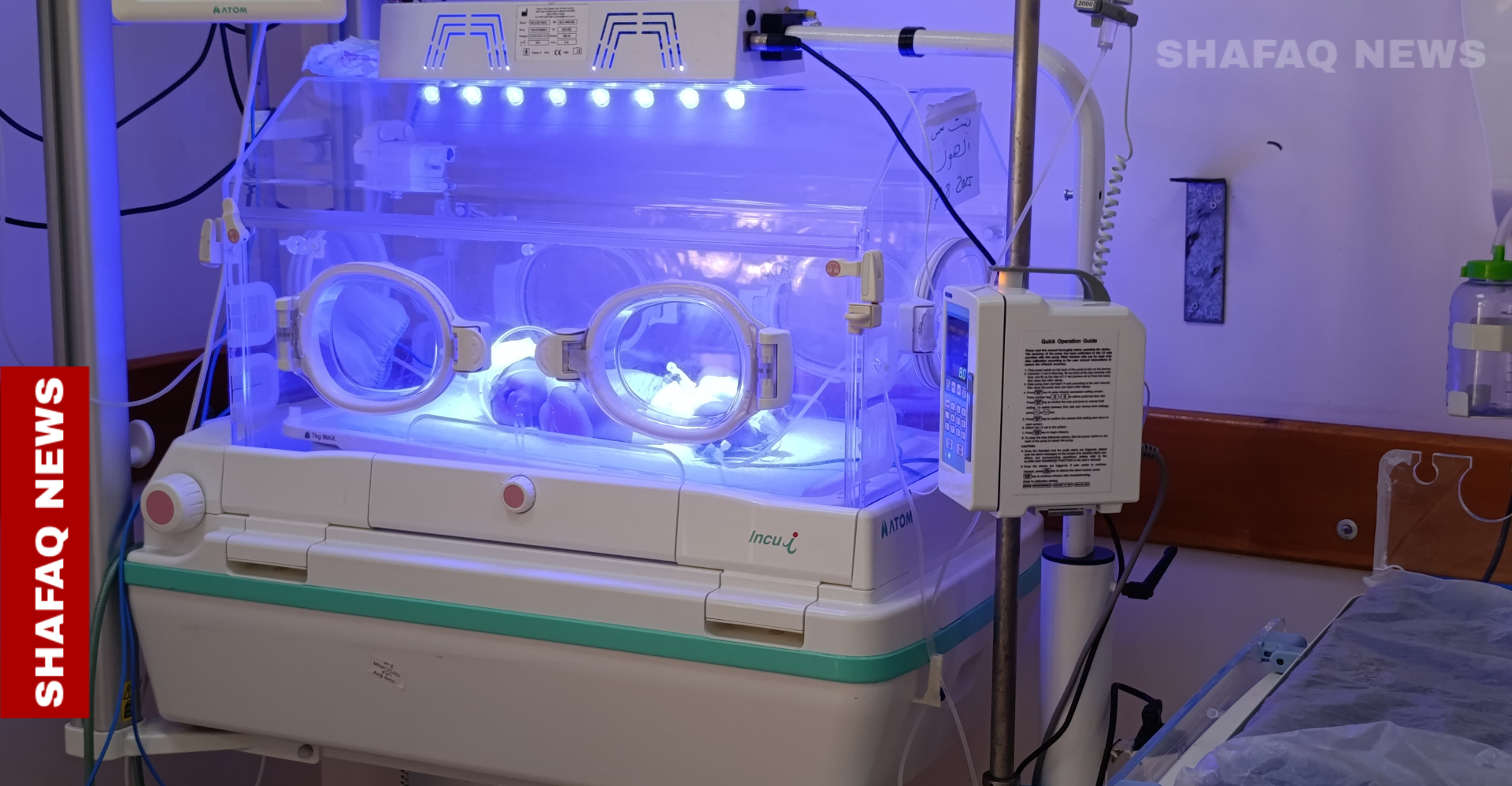
An Invisible Emergency
While malnutrition and disease among older children often draw more attention, doctors warn that newborns are quietly bearing the brunt of the health system’s collapse. Many are born prematurely or underweight after mothers endured months of poor nutrition and extreme stress during pregnancy. These babies require incubators, constant monitoring, and specialized feeding—services now available only sporadically.
The destruction of hospitals, the loss of trained neonatal nurses, and the interruption of medical supply chains have combined to push Gaza’s infant survival rates dangerously low. Aid groups say without immediate delivery of incubators, oxygen, antibiotics, and fuel, more newborns will die—not from the direct violence of war, but from the slow suffocation of a health system under siege.
A Race Against Time
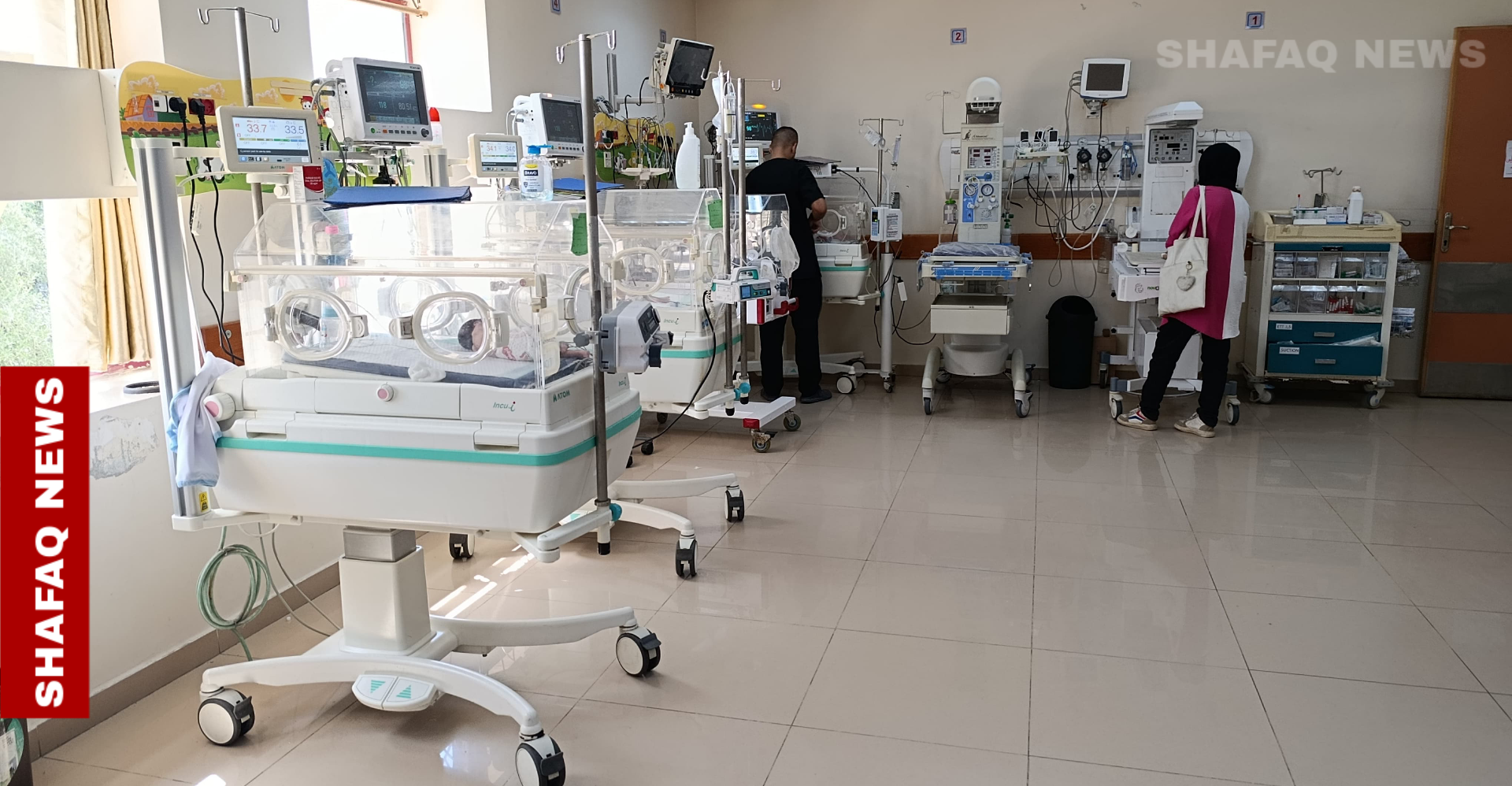
For doctors, the question is no longer how to treat each case, but how to decide which baby gets the last available machine, the final ampoule of medicine, or the only working incubator. “We are losing lives that could be saved,” Dr. al-Fella said.
For Baby Salman, survival depends on whether those scarce resources hold out long enough. For Gaza’s other newborns, the battle is the same—a fight for life that begins not at birth, but in a health system already pushed beyond its breaking point.