Shafaq News
A journey through Saladin province —from Tikrit and Samarra to Baiji— exploring how history, identity, and post-ISIS recovery are reshaping daily life in central Iraq.
Saladin, named after the great Muslim leader Salah al-Din al-Ayyubi, is both a symbol and a reality: a province shaped by empire, faith, and resilience. Spanning more than 24,000 square kilometers, it connects Baghdad to the north, acting as a bridge between Iraq’s central heartlands and its northern provinces.
Its landscapes range from the fertile Tigris floodplains to the rugged Hamrin and Makhoul ranges, forming a natural corridor for trade, migration, and history. Archaeological sites in Tikrit and Samarra point to civilizations that thrived long before Islam. Samarra, with its spiral Malwiya minaret and Abbasid palace ruins, served as a ninth-century hub of learning and power, attracting scholars, poets, and engineers.
The province’s identity remains closely intertwined with its namesake. Salah al-Din’s legacy —justice, unity, and moral authority— continues to resonate with residents. Through the Ottoman and modern periods, Saladin maintained its agricultural wealth and tribal influence. Tikrit produced military officers and politicians who shaped Iraq’s modern history; under Saddam Hussein, the province occupied a central, if controversial, role in national affairs.
The fall of Saddam’s regime in 2003 plunged the province into insurgency and later ISIS occupation. Cities such as Tikrit and Baiji were left in ruins. Today, a steady process of recovery is unfolding. Schools, homes, and marketplaces have reopened, demonstrating that Saladin is not a province in decline but one defined by endurance.
Neighbors Before Sects
Saladin’s population of roughly 1.6–1.8 million forms a mosaic of Arabs, Kurds, Turkmen, Sunnis, and Shias. Arabic is the dominant language, though Kurdish and Turkmen are commonly spoken in Tuz Khurmatu and the northeastern districts. Sunnis hold majorities in Tikrit, Samarra, and Baiji, while Shia communities are concentrated in Balad and Dujail. Samarra, home to the eleventh Shia Imam, Mohammad bin Hassan Al-Askari Shrine, remains a sacred site, drawing pilgrims from across Iraq and Iran.
The province’s diversity has brought both challenges and resilience. Markets, mosques, and schools convey a quiet ethos: “neighbors before sects.” Tribal networks continue to play a central role in local governance. The Jubur, al-Bu Nasir, Ubayd, and al-Dulaym tribes mediate disputes and uphold social order in areas where the state’s presence is limited.
Tikrit serves as the administrative and educational center, while Samarra combines commerce with spiritual significance. Baiji and Balad sustain a balance of industrial and agricultural activity. Rural villages, long scarred by war and displacement, are gradually returning to life. Farmers adapt to damaged irrigation systems, and families rebuild their homes. Residents identify as ‘’Ahl al-Nahr’’ —people of the river— reflecting their enduring connection to the Tigris.
Read more: Iraq's rentier economy: Risks and reforms
Oil Meets Dust
Saladin’s terrain presents both opportunities and challenges as the Tigris irrigates farmland, supports cities, and sustains livelihoods. To the east, the Hamrin Mountains harbor minerals and fragile forests, while to the west, semi-desert plains stretch toward al-Anbar province.
The province experiences a continental climate, with scorching summers above 45°C, cool winters, and most rainfall between November and March. Water scarcity remains, as almost the whole of Iraq, a persistent concern. Agriculture dominates local life, with wheat, barley, corn, vegetables, dates, cotton, and livestock forming the backbone of production. Recurring droughts, damaged irrigation networks, and rising soil salinity continue to threaten yields.
Beneath the surface, oil and gas remain strategic resources. The Baiji Refinery, once Iraq’s largest, processed over 300,000 barrels daily. The Ajeel and Allas oil fields have resumed activity, while phosphate deposits provide further economic potential.
Environmental pressures persist, including desertification, reduced Tigris flow, industrial pollution, and deforestation, all intensified over recent decades. Yet farmers maintain traditional water-sharing practices and crop rotation, sustaining livelihoods through knowledge passed down across generations.
Rising from Ruins
Industry in Saladin revolves around oil. The partial restoration of the Baiji Refinery provides employment and supports economic stability, while the Ajeel and Allas fields contribute to energy output. Trade has revived along the Baghdad–Mosul corridor, and Tikrit’s markets bustle with activity.
Infrastructure, however, remains uneven. Electricity supply is inconsistent, schools and hospitals are often overcrowded, and many roads are under repair. Despite these challenges, progress is evident compared to the devastation following the ISIS occupation.
Education plays a central role in the province’s recovery.
The University of Tikrit and Samarra University host tens of thousands of
students. The faculties of medicine, engineering, and agriculture train the
next generation tasked with rebuilding Saladin. Schools and vocational programs
in rural areas complement urban institutions, linking recovery to opportunity.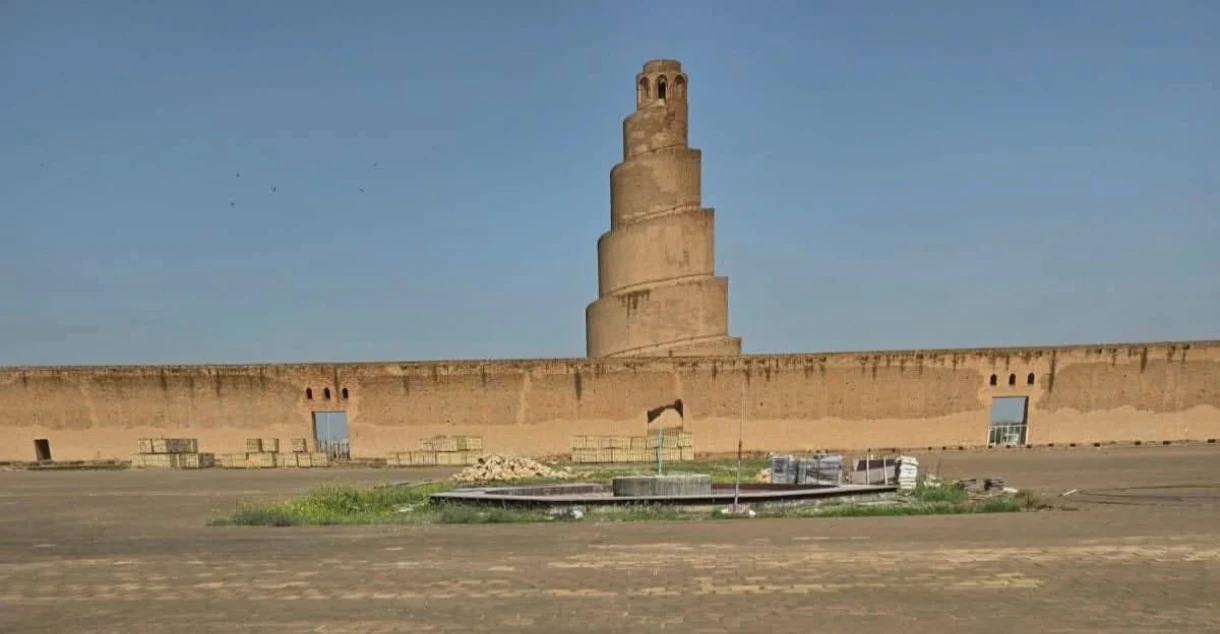
Verse and Veneration
Saladin’s culture blends historical grandeur, religious significance, and contemporary creativity. Samarra’s al-Askari Shrine and Abbasid monuments serve as both sacred sites and cultural anchors, attracting artisans, pilgrims, and historians.
Cultural life thrives despite adversity with Tikrit hosts poetry readings, art exhibitions, and music performances, often exploring themes of war, displacement, and return. Universities function as cultural hubs, fostering research, debate, and heritage preservation. Tribal traditions, oral storytelling, mawwal poetry, and music continue in weddings and religious festivals, linking communities to their past.
Read more: From Babylon to Erbil: Iraq’s UNESCO sites and those next in line
Future Is Now
Saladin faces structural challenges across reconstruction, economic diversification, social healing, and environmental stress. Thousands of homes, schools, and roads remain under repair, while bureaucratic delays and limited support from Baghdad complicate progress.
Economic reliance on oil and agriculture leaves the province vulnerable. Emerging solar energy projects, small-scale industries, and logistics ventures offer new avenues for growth. Environmental pressures —including drought, reduced Tigris flow, and desertification— demand urgent adaptation.
In addition, areas once under ISIS control continue to experience mistrust between sects and tribes. Dialogue programs, tribal mediation, and community initiatives are gradually restoring trust.
Despite these hurdles, signs of optimism are visible. Young engineers develop low-cost housing solutions, students document heritage restoration, and women-led cooperatives revive traditional crafts for export. Each initiative reflects a province not only surviving but striving toward a sustainable and diversified future.
Written and edited by Shafaq News staff.