Shafaq News- Kobani
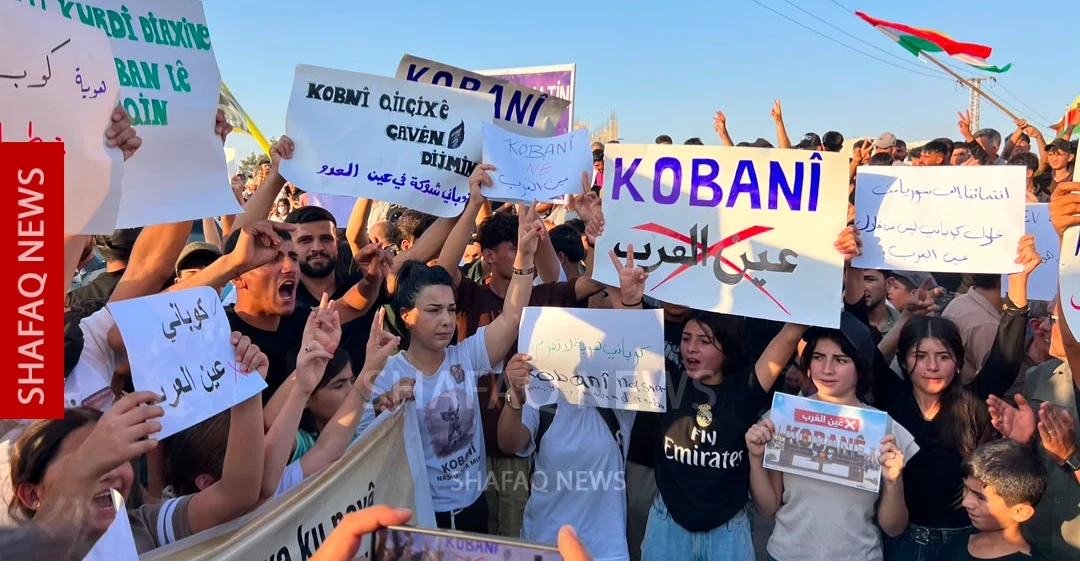
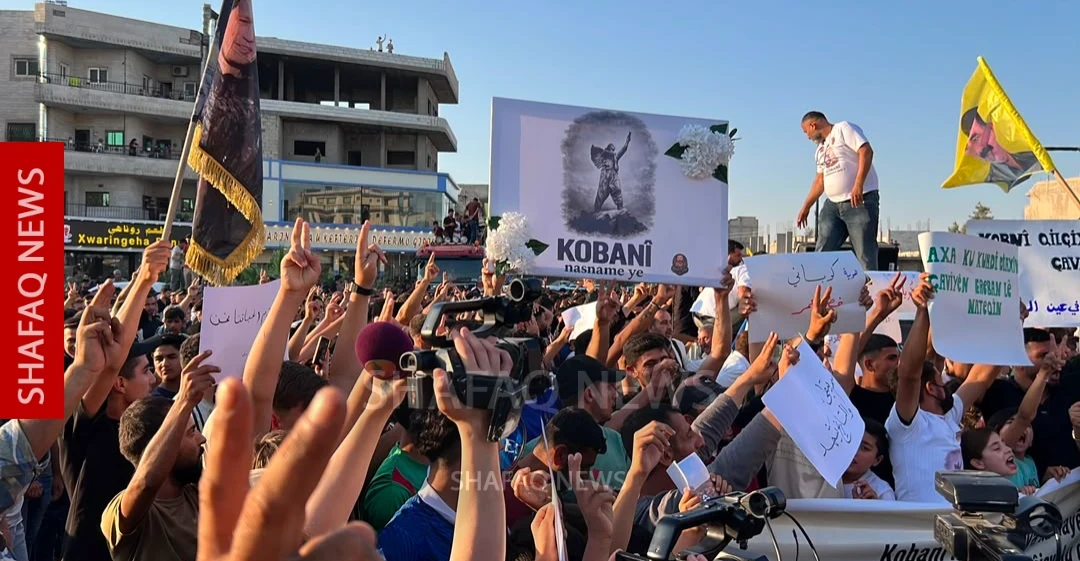
Thousands of residents, activists, journalists, and intellectuals marched through the northern Syrian city of Kobani on Thursday, calling on Damascus to officially recognize the city by its Kurdish name instead of Ain al-Arab.
The demonstration, sparked by the installation of a government sign bearing the name “Ain al-Arab” at the Qara Qozak Bridge on the city’s outskirts, began at Ashti Roundabout and proceeded to Free Women’s Square in the city center, where participants carried banners reading, “No to Ain al-Arab, Yes to Kobani,” “Kobani is our identity,” and “The name is a right... Kobani is a historical right,” while urging the government to use “Kobani” in official documents and public signage.
Activist Hawkar Sheikhi, who spoke to Shafaq News, said Damascus should restore the original Kurdish names of towns and villages that, in his view, had been Arabized under successive governments to erase the identity of Kurdish areas. “We are protesting today to reject these practices and to affirm our right to have the new Syrian government officially adopt the city's historical name, Kobani,” he remarked, adding that demonstrations would continue until the issue is addressed.
District administrator Ibrahim Muslim told Shafaq News that the city’s official name can only be changed by Syria’s Ministry of Local Administration, confirming that residents’ requests would be forwarded to the ministry for consideration under the applicable legal procedures.
Restoring historical place names, Kurdish National Council spokesperson Faisal Youssef argued, would recognize Syria’s cultural diversity and reverse decades of Arabization. He characterized the move as “a national entitlement” and an important step toward transitional justice and national reconciliation.
Kobani, officially known as Ain al-Arab, lies in northern Aleppo province. Ottoman records identified the area as “Arab Pinar” (“Spring of the Arabs”), while the French Mandate established the administrative district of Ain al-Arab in 1937. Some accounts attribute the name “Kobani” to the German word Kompanie (“company”), after the firm that built part of the Baghdad Railway and established a nearby station. Kurdish historians, however, argue that it instead originates from the Kurdish phrase “Kom Bani,” the name of a historic tribal confederation that once dominated the area.

Read more: Kurds in Syria: From marginalization to a defining political force