Shafaq News- Damascus
The Al-Zahiriyyah Library in the Syrian capital, Damascus, preserves a scholarly and cultural legacy spanning nearly eight centuries, housing about 171,000 books and volumes alongside a collection of rare manuscripts documenting Arab and Islamic science and culture.
The library was founded in 1277 during the reign of Sultan
Al-Zahir Baybars, one of the most prominent rulers of the Mamluk Sultanate, as
part of the Al-Zahiriyyah Madrasa in Damascus Old City near the Umayyad Mosque.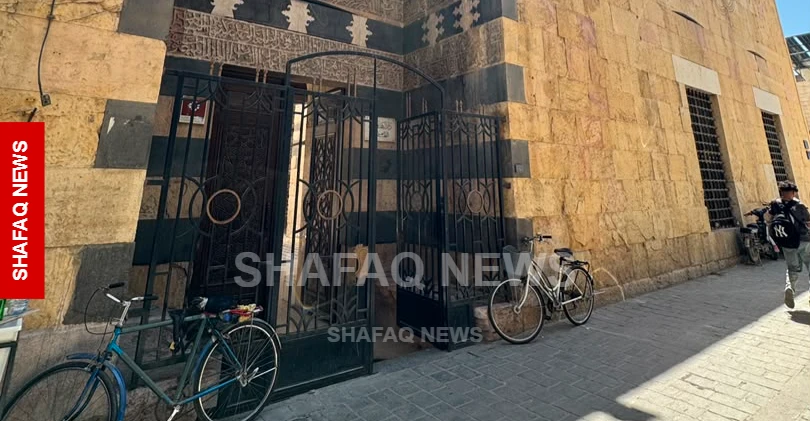
Al-Zahiriyyah began as a residential religious school before gradually becoming a center for preserving books and manuscripts and attracting scholars and researchers. Its collections expanded over the decades through donations and the incorporation of holdings from other libraries.
In 1919, it became Syria’s national library and was affiliated with the Arabic Language Academy in Damascus.
Ahmed Al-Saeed, head of the library's Archives and
Organization Department, told Shafaq News that the library had received 4,612
manuscripts as gifts from scholars and researchers, along with 1,206 printed
books donated to its collection.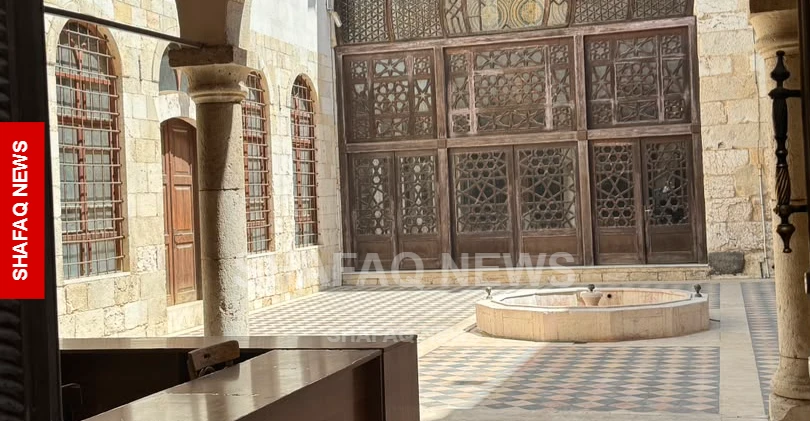
The collection also grew through the incorporation of several private libraries, including those of Abdullah Pasha, Suleiman Pasha, and Mulla Othman Al-Kurdi, adding greater variety to its scholarly holdings.
The library currently has two reading halls furnished with wooden tables and chairs. Bookshelves line the stone walls, while decorated floors and carved wooden ceilings feature floral and geometric motifs, with chandeliers hanging overhead.
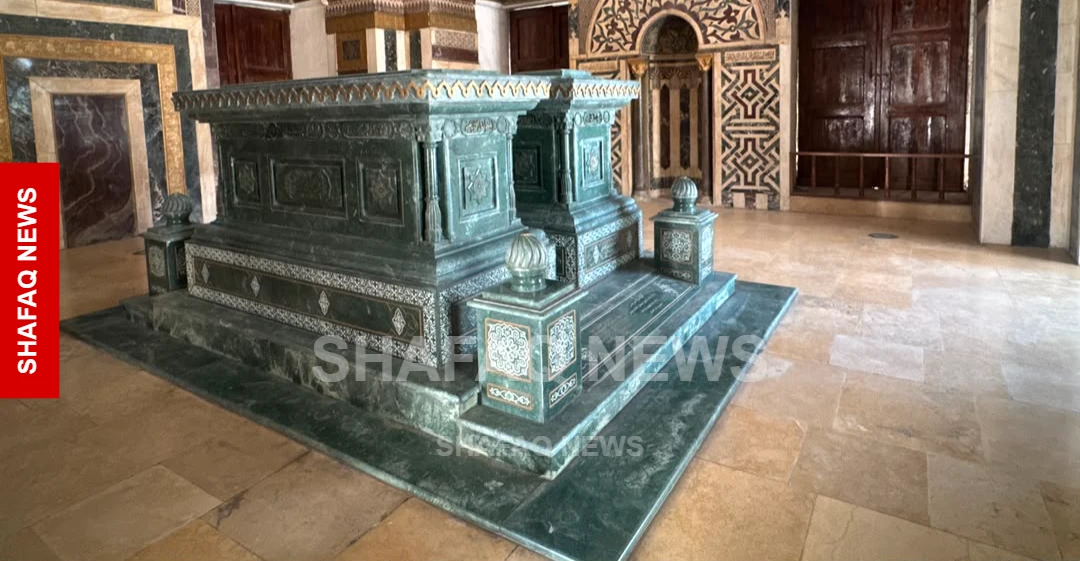
The building also houses the tombs of Sultan Al-Zahir
Baybars and his son, Al-Malik Al-Said Baraka Khan, set within an ornately
decorated architectural space. The tombs underwent renovation in 2007 using
alabaster marble as part of a partnership between Syria and Kazakhstan.