Shafaq News- Duhok
Iraqi Yazidis began their annual olive harvest at Lalish Temple in Duhok province, continuing a centuries-old religious tradition in which oil extracted from the trees is used exclusively to light the temple’s lamps and wicks.
The harvest brings together temple custodians, clerics, and volunteers from more than 30 Yazidi villages, representing communities in Bashiqa, Bahzani, Khatarah, Sinjar, and other areas.
Mir Amer told Shafaq News on Wednesday that the harvest takes place at the same time each year, with custodians of Sheikh Adi’s shrine collecting and storing the olives before taking them to oil presses next April.
Lalish Temple has around 1,400 olive trees, producing between 20 and 30 metric tons of olives in good seasons, he added. Volunteers travel from different Yazidi areas at their own expense, receiving neither financial compensation nor government support.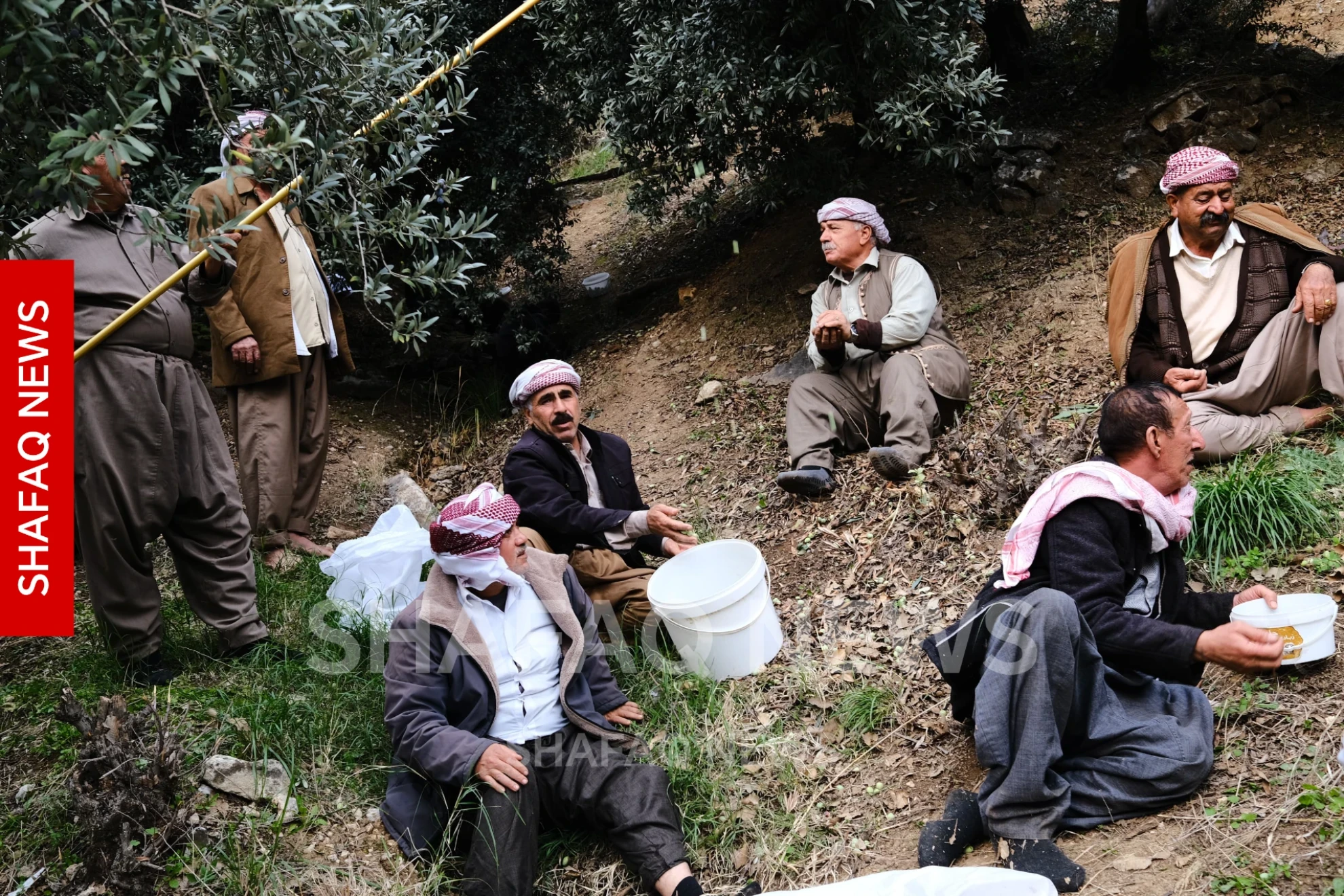
Marwan Aloubi Khelmtekar, a Lalish Temple custodian from Bashiqa, described the harvest as a tradition passed down through generations over hundreds of years, with rituals dating back to Sultan Sheikh Hadi.
The olive oil is never used for cooking or any other purpose. It is reserved exclusively for the temple’s lamps and wicks, which symbolize the souls of righteous people who served the temple and whose memory lives on through the ritual, Khelmtekar explained.
Although some seasons yield enough oil to meet the temple’s needs for several years, the harvest continues annually to preserve the tradition and pass it on to future generations, he added.
The Yazidis, an ancient monotheistic religious minority in northern Iraq, were targeted by ISIS during its August 2014 assault on Sinjar, when an estimated 12,000 Yazidis were killed or abducted. The atrocities have since been recognized internationally as genocide.
Read more: The long shadow of Sinjar: Twelve years after the ISIS genocide